 My Account
 +7 (495) 129 37 00
 st. Derbenevskaya, 9
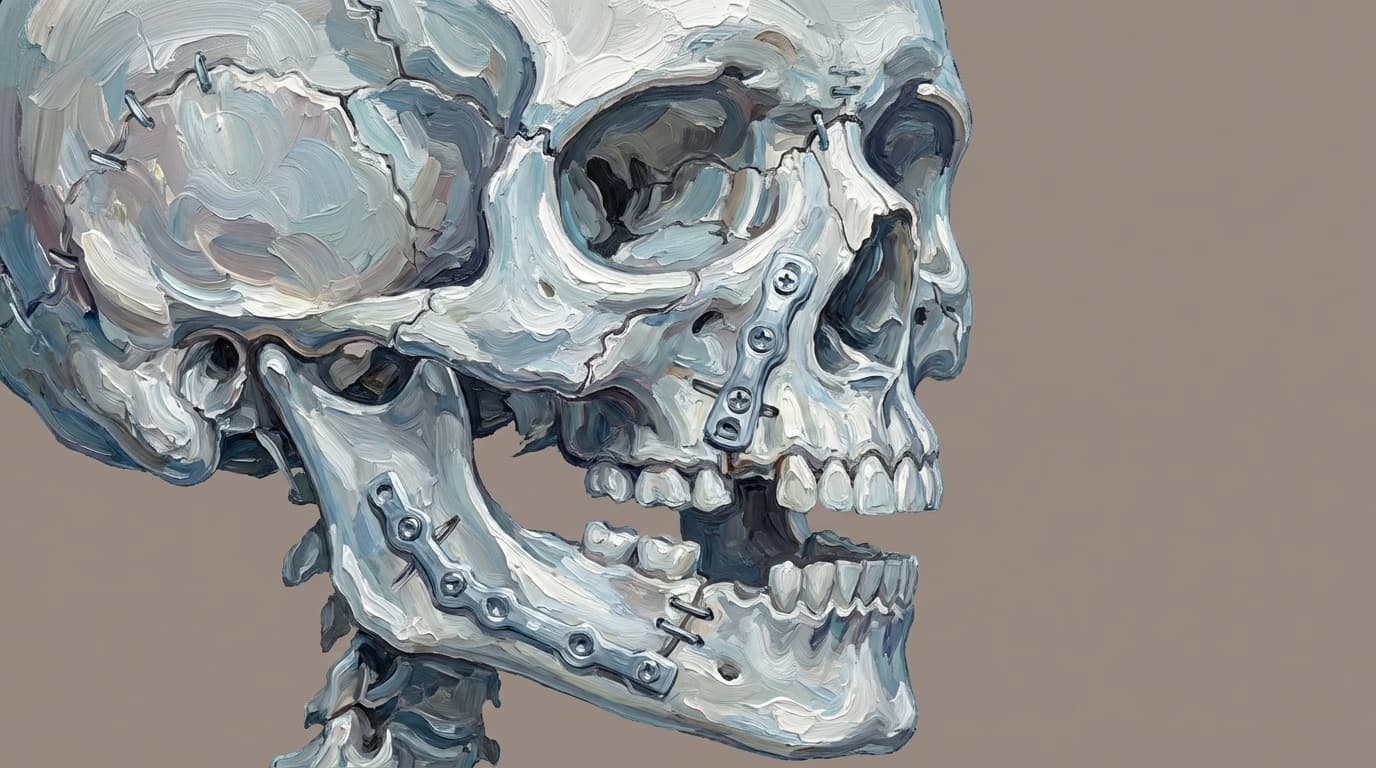
Trauma and Post-Traumatic Deformations of the Maxillofacial Area
Treatment of Facial Skeleton Fractures (Lower and Upper Jaw, Zygoma, Orbit)
Restoration of proper bite and facial symmetry after fractures using modern titanium plates and 3D tomography.
Available sections:
Trauma and Post-Traumatic Deformities of the Maxillofacial Region
Fractures of the facial bones are among the most common injuries in maxillofacial surgery. Car accidents, workplace injuries, falls, and sports trauma can all lead to fractures of the lower or upper jaw, cheekbones, or orbital walls. Timely and technically correct treatment determines whether chewing, speech, and breathing function will be restored, and whether a deformity will remain for years.
At Iskusstvo Clinic in Moscow, treatment of maxillofacial trauma is performed by surgeons trained in the school of Professor A.I. Nerobeev, specialists experienced both in acute interventions and complex reconstructions for long-standing deformities. The clinic has 5 operating rooms and is equipped at the level of leading federal medical centers.
When Help from a Maxillofacial Surgeon Is Needed
Fractures of the lower jaw, including the condylar process, angle, and body of the mandible
Fractures of the upper jaw, including Le Fort I, II, and III fractures
Fractures of the zygomatic bone and zygomatic-orbital complex
Fractures of the orbital walls, including blowout fractures of the inferior and medial walls
Nasal bone fractures
Combined fractures of several structures of the facial skeleton
Long-standing fractures with improper healing
Post-traumatic facial deformities: asymmetry, tissue depression, and bite disorders
Three Main Directions
Treatment of Facial Bone Fractures
Treatment involves repositioning the bone fragments and fixing them using osteosynthesis methods. It is performed in the acute period, usually within the first 10–14 days after injury.
Properly performed osteosynthesis is essential for restoring normal bite, facial symmetry, and function.
Repositioning and Fixation of Fragments, or Osteosynthesis
Osteosynthesis is a surgical technique for fixing bone fragments with metal plates and screws. It allows the bones to be securely held in the correct position during healing without external fixation devices.
Modern osteosynthesis systems provide precise anatomical repositioning even in complex comminuted fractures.
Correction of Post-Traumatic Deformities
If a fracture was treated incorrectly, not treated in time, or led to scar changes, a post-traumatic deformity may form. Facial asymmetry, bite disorders, depression of the cheekbone area, and diplopia after orbital fractures can all be surgically corrected, although this requires more complex planning than treatment of an acute injury.
How Treatment Is Performed
When a patient presents with an acute injury, CT imaging of the facial skeleton is performed. This is a mandatory examination that allows the surgeon to accurately assess the type of fracture and degree of displacement.
Based on the CT results, the surgeon plans the scope of intervention. Operations are performed under general anesthesia. Whenever possible, incisions are hidden in natural facial folds or inside the oral cavity.
In long-standing deformities, the treatment plan is more complex. It requires three-dimensional analysis of the facial skeleton and often 3D modeling with the production of custom implants or surgical guides. Treatment is often performed in several stages.
Rehabilitation
After osteosynthesis for lower jaw fractures, a soft diet is prescribed for 4–6 weeks. Soft tissue swelling resolves within 2–4 weeks.
Bone healing occurs within 4–8 weeks. Timelines are individual and depend on the type of fracture, age, and general health condition.
In fractures involving bite disorders, orthodontic treatment is often required after the surgical stage.
Why Choose Iskusstvo Clinic
Experience with Complex Cases
The clinic’s surgeons operate on both fresh injuries and long-standing deformities, including cases after unsuccessful operations performed at other institutions. The school of Professor Nerobeev is, above all, experience in managing the most complex reconstructive challenges.
Equipment
The clinic has 5 operating rooms, CT diagnostics, and modern osteosynthesis systems: everything necessary to perform interventions of any scope.
Comprehensive Approach
In cases of bite disorders caused by trauma, treatment is planned together with an orthodontist within one clinic.
Frequently Asked Questions
When Should a Facial Fracture Be Operated On: Immediately or Can It Wait?
The optimal time for most facial skeleton fractures is within the first 5–10 days, before scar tissue begins to develop. In cases of pronounced soft tissue swelling, surgery may sometimes be delayed for 3–5 days until swelling decreases.
Delaying surgery for several weeks is undesirable: long-standing fractures are significantly more difficult to treat.
Is Osteosynthesis Always Necessary, or Can Treatment Be Done Without Surgery?
Some non-displaced fractures can be treated conservatively. If there is displacement of fragments, bite disorder, facial deformity, or functional impairment, surgery is necessary.
The specific decision is made after CT imaging and examination.
Will There Be Visible Scars After Surgery?
Surgeons use approaches hidden in natural facial folds, inside the mouth, or along the hairline. With proper technique, scars are minimal.
For fractures of the zygomatic-orbital complex, access through the conjunctiva or eyebrow may be used.
Can a Deformity Be Corrected If the Fracture Healed Incorrectly Several Years Ago?
Yes. Long-standing deformities of the facial skeleton can be corrected through repeat osteotomy, or bone cutting, and repositioning.
This is technically more difficult than treating a fresh injury, but a well-established technique provides a reliable result.
Is an Orthodontist Needed After Jaw Surgery?
For fractures involving the bite, orthodontic treatment is often part of rehabilitation. At Iskusstvo Clinic, the surgeon and orthodontist work within one space, which simplifies treatment coordination.
Book a Consultation
Book a consultation. The surgeon will review the images, assess the situation, and recommend the optimal treatment plan.
OUR SPECIALISTS
A team that continues the traditions of Professor A.I. Nerobeev's school. Our specialists not only practice but also teach, developing unique techniques in reconstructive and aesthetic medicine.

Leave your number and we will contact you