 My Account
 +7 (495) 129 37 00
 st. Derbenevskaya, 9
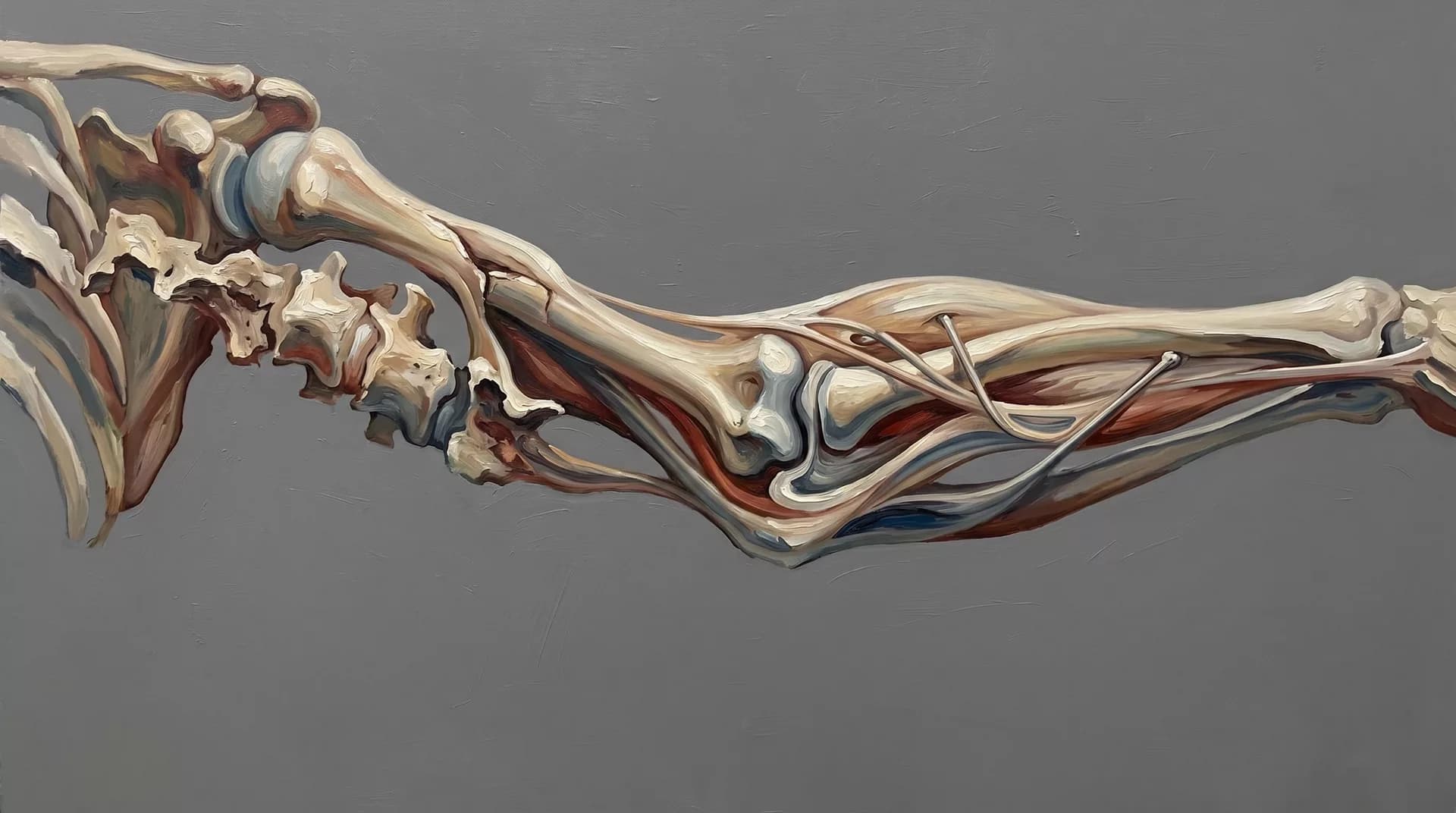
Correction of Post-Traumatic Deformations
Scars, depressions, and asymmetry after facial trauma are corrected with own tissue grafts and laser.
Available sections:
Correction of Post-Traumatic Deformities of the Maxillofacial Region
A post-traumatic facial deformity is a persistent change in shape and symmetry that occurs after a fracture has healed incorrectly, was not treated in time, or led to scar changes in the tissues. Depression of the cheekbone area, asymmetry of the lower third of the face, bite disturbance, and diplopia after an orbital fracture can all significantly affect both function and quality of life.
At Iskusstvo Clinic in Moscow, surgeons trained in the school of Professor A.I. Nerobeev have experience correcting deformities of any complexity, including cases after multiple previous operations.
Types of Post-Traumatic Deformities
Deformity of the cheekbone area: depression and asymmetry after an incorrectly healed or untreated fracture
Deformity of the midface after an upper jaw fracture: bite disturbance and profile changes
Asymmetry of the lower third of the face after a displaced lower jaw fracture
Post-traumatic ankylosis, or immobility, of the temporomandibular joint
Deformity of the lower orbital rim and enophthalmos, or sinking of the eyeball, after an old orbital fracture
Scar deformities of the facial soft tissues after trauma or burns
Combined deformities involving both bone and soft tissues
Surgical Planning
Correction of long-standing deformities is technically more complex than treatment of a fresh injury. The bone has already healed, and the surrounding tissues have undergone scar changes.
For this reason, special attention is paid to planning. CT imaging with three-dimensional reconstruction is performed. If necessary, 3D modeling and the production of surgical guides or custom implants based on CT data are used.
In cases involving bite disorders, an orthodontist takes part in planning. In some cases, preoperative orthodontic preparation makes the surgical stage easier and improves the result.
Surgical Methods
Repeat Osteotomy and Repositioning
This is the main method for deformities caused by incorrect bone healing. The surgeon re-cuts the bone in the deformity area, meaning osteotomy, repositions the fragment into the correct position, and fixes it with plates.
This method is used for deformities of the zygomatic bone, lower jaw, and upper jaw.
Contour Plastic Surgery Using Autografts
When there is bone tissue deficiency, such as depression or loss of volume, the patient’s own bone from the parietal area, ribs, or chin may be used to fill the defect and restore the facial contour.
Custom Implants
In complex deformities, when the shape cannot be accurately restored with an autograft, custom implants made of titanium or polyethylene are produced using the patient’s CT data.
They provide maximum accuracy in restoring the lost contour.
Soft Tissue Correction
After correction of the bone deformity, soft tissue correction is often required: scar correction, transfer of skin and fat flaps, and lipofilling to restore volume.
These stages may be planned at the same time or performed step by step.
Rehabilitation
Recovery timelines depend on the scope of surgery. After repeat osteotomy and repositioning, hospitalization lasts 5–10 days. For jaw surgery, a soft diet is prescribed for 4–6 weeks.
The final result forms after 6–12 months as the bone heals and the soft tissues adapt.
Contraindications
Contraindications include severe systemic diseases in the stage of decompensation and active infectious or inflammatory processes.
Orthodontic preparation for bite disorders may take several months before surgery.
The final decision is made by the surgeon after examination.
Frequently Asked Questions
How Many Years After Trauma Can a Deformity Still Be Corrected?
There is no time limit for the duration of a deformity. Surgery is possible even 10 or 20 years after trauma, although technically it is more difficult than treating a fresh fracture.
The main questions are the condition of the tissues and the presence of functional impairment.
Is Orthodontic Preparation Always Required Before Surgery?
In deformities involving bite disturbance, in most cases, yes.
Orthodontic preparation helps achieve a better surgical result and reduces the risk of relapse. The specific need is assessed jointly by the surgeon and orthodontist.
Can an Implant Be Used Instead of Repeat Osteotomy?
It depends on the nature of the deformity. If there is volume deficiency without bite disturbance, a custom implant may provide a good result without osteotomy.
If there is bite disturbance and significant bone displacement, osteotomy is necessary. An implant cannot solve this problem.
What Will the Result Look Like? Can I See Examples?
During the consultation, the surgeon shows examples of similar operations and explains the expected result in relation to the specific case.
Computer modeling is used for planning, but it is not a guarantee of an exact match with the final result.
Book a Consultation
Book a consultation. The surgeon will assess the deformity, review the images, and recommend a realistic correction plan.
OUR SPECIALISTS
A team that continues the traditions of Professor A.I. Nerobeev's school. Our specialists not only practice but also teach, developing unique techniques in reconstructive and aesthetic medicine.

Leave your number and we will contact you