 My Account
 +7 (495) 129 37 00
 st. Derbenevskaya, 9
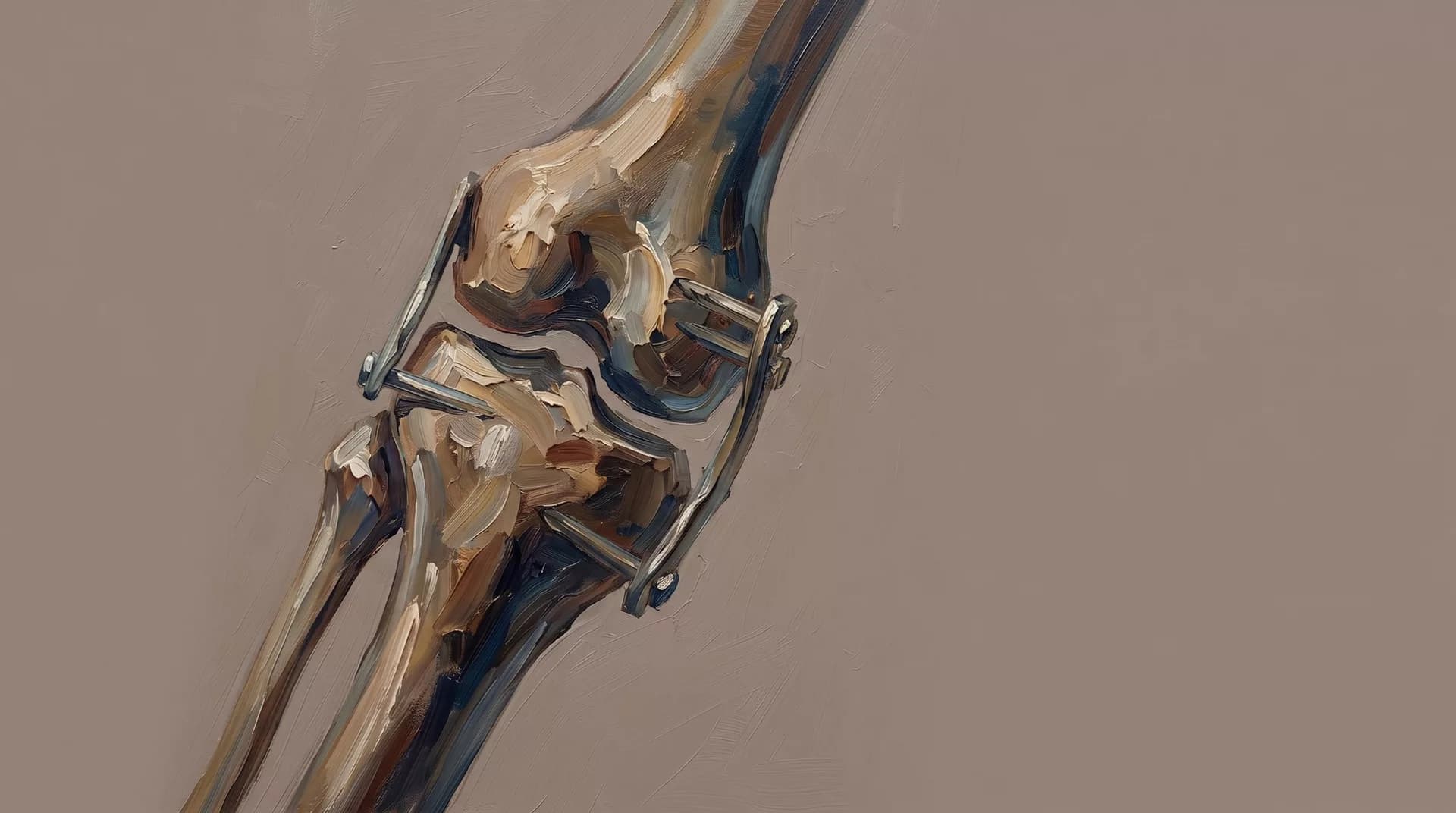
Repositioning and Fixation of Fragments (Osteosynthesis)
Restoring proper bite and facial contours using mini-plates and screws.
Available sections:
Repositioning and Fixation of Fragments, or Osteosynthesis
Osteosynthesis of the facial skeleton is surgical fixation of bone fragments using metal structures: plates, screws, and meshes. It is a key stage in the treatment of displaced fractures. Without reliable fixation, bones heal in an incorrect position, and correcting the deformity later becomes much more difficult.
At Iskusstvo Clinic in Moscow, modern osteosynthesis systems are used, making it possible to perform precise anatomical repositioning even in complex comminuted fractures.
What Osteosynthesis Is and How It Works
After repositioning, meaning precise alignment of the fragments, the surgeon fixes them with plates and screws made of medical titanium, a material that is biocompatible with body tissues.
The structure holds the bone in the correct position throughout the healing period without requiring external immobilization. This allows the patient to return to normal life earlier compared with conservative fixation methods.
Types of Osteosynthesis in Maxillofacial Surgery
Plate Osteosynthesis
This is the most common method: plates are fixed to the surface of the bone. It is used for fractures of the lower jaw, upper jaw, and zygomatic bone.
The plates may be straight, L-shaped, or Y-shaped, depending on the location and direction of the fracture.
Compression Osteosynthesis
Special plates create compressive force between the fragments, accelerating bone healing. This method is used for fractures of the body of the lower jaw.
Reconstruction Plates
For lower jaw defects after tumor removal or comminuted fractures with bone tissue loss, massive reconstruction plates are used. They temporarily replace a section of bone until bone grafting is performed.
Resorbable Fixation Devices
Plates and screws made of resorbable materials, such as poly-L-lactic acid, are used mainly in pediatric practice so as not to interfere with bone growth.
They gradually dissolve over 1–2 years.
Intermaxillary Fixation, or Splinting
This is temporary fixation of the upper and lower jaws with dental splints to create the correct bite position during healing.
It is used as an independent method for non-displaced fractures or as an addition to osteosynthesis.
How the Operation Is Performed
The operation is performed under general anesthesia. The surgeon creates access to the fracture area, whenever possible through the mucosa of the oral cavity or natural facial folds to avoid visible scars.
The fragments are aligned in the anatomically correct position and fixed with plates and screws. In fractures involving bite disturbance, the correct position of the upper and lower jaws is controlled before and during surgery.
The duration of surgery ranges from 1 to 4 hours, depending on the complexity and the number of fixation areas.
Rehabilitation
Hospitalization after osteosynthesis usually lasts 3–7 days.
A soft diet is prescribed for 4–6 weeks in cases of lower jaw fractures. Soft tissue swelling resolves within 2–3 weeks.
A follow-up CT scan is performed after 3–4 months to assess the quality of bone healing.
Contraindications
Contraindications include an unstable general condition of the patient, an active infectious process in the surgical area, and uncorrectable blood clotting disorders.
In cases of metal allergy, the composition of the fixation devices is clarified.
Frequently Asked Questions
Can the Plates Be Felt Under the Skin?
In most cases, no. The plates are placed directly on the bone under the soft tissues.
In areas with thin tissues, such as the chin, the plate may sometimes be palpable, but it usually does not cause discomfort.
Do the Plates Need to Be Removed After Bone Healing?
In most cases, the plates remain permanently, and this is safe.
Removal is indicated in cases of infection, painful palpation, or special clinical situations.
Does Osteosynthesis Affect MRI Examinations?
Titanium plates and screws are not ferromagnetic and do not interfere with MRI examinations. They do not heat up or move in the magnetic field.
How Soon After Surgery Can I Eat Regular Food?
For lower jaw fractures, a gradual transition to a regular diet usually begins after 4–6 weeks.
For isolated fractures of the zygomatic bone or orbit, food restrictions are usually not required.
Book a Consultation
Book a consultation. The surgeon will assess the images and recommend the optimal fixation method.
OUR SPECIALISTS
A team that continues the traditions of Professor A.I. Nerobeev's school. Our specialists not only practice but also teach, developing unique techniques in reconstructive and aesthetic medicine.




Leave your number and we will contact you