 My Account
 +7 (495) 129 37 00
 st. Derbenevskaya, 9
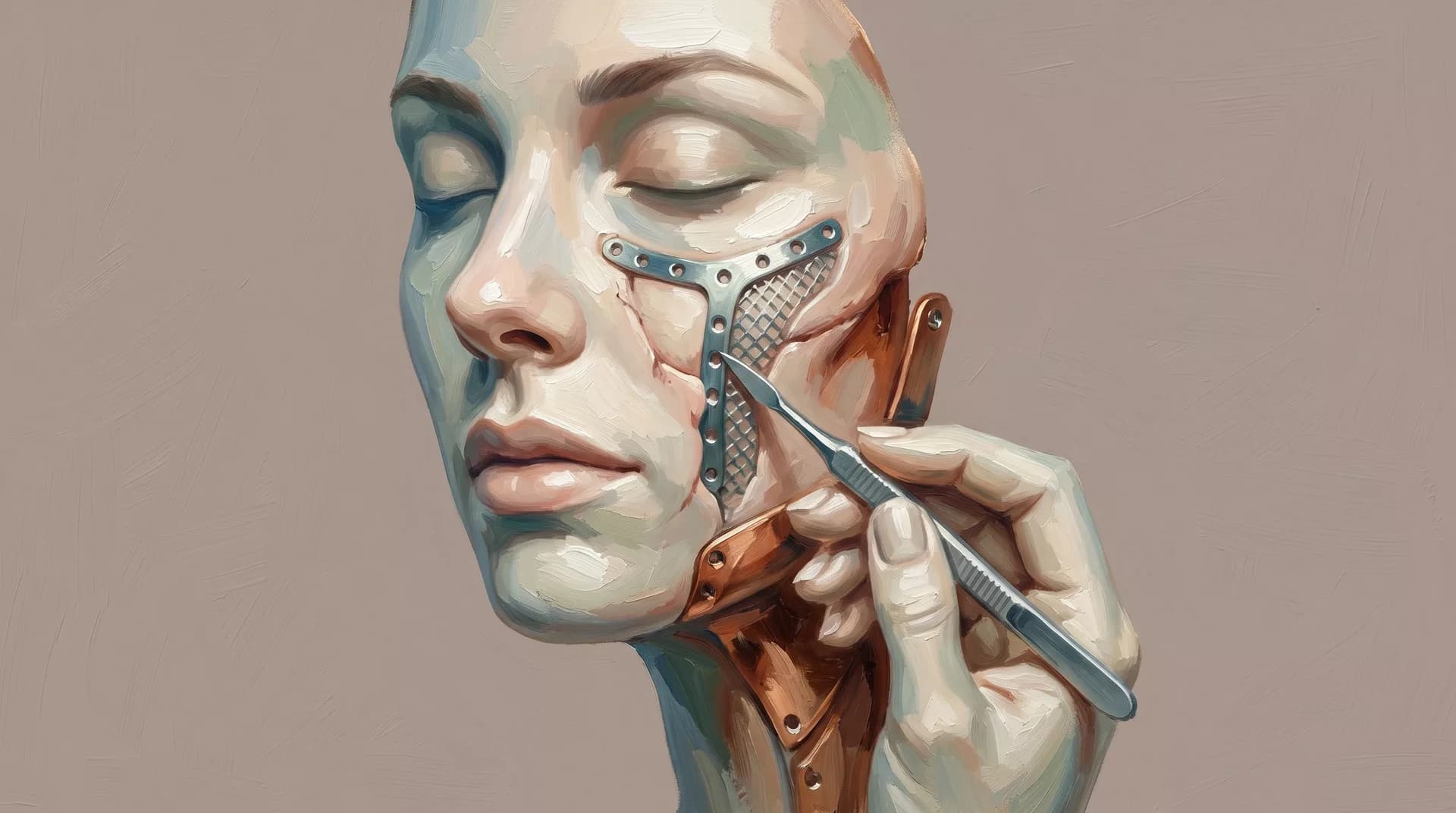
Correction of Post-Traumatic and Postoperative Defects
Available sections:
Correction of Post-Traumatic and Postoperative Facial Defects
Defects of the soft tissues and bones of the face that occur after trauma, surgical operations, or severe infections are among the most complex challenges in reconstructive surgery. Unlike planned aesthetic procedures, in these cases the surgeon works with altered tissues: scars, impaired blood supply, and volume deficiency.
This is why correction of post-traumatic and postoperative defects requires a high level of reconstructive expertise, the kind of experience developed at Iskusstvo Clinic in Moscow through the school of Professor A.I. Nerobeev.
What Defects We Treat
Post-traumatic defects of the soft tissues of the face and neck, including consequences of car accidents, workplace injuries, burns, and gunshot wounds
Deformities after tumor removal, including extensive defects after oncological operations on the face, jaws, and neck
Scar deformities with functional impairment: ectropion of the lower eyelid, nasal ala deformity, limited mouth opening, and lip deformity
Defects after osteomyelitis with loss of bone tissue
Repeat operations after unsuccessful reconstructive procedures performed at other institutions
Facial deformities caused by severe infections, including necrotizing fasciitis and noma
Reconstruction Methods
The choice of method depends on the size and location of the defect, the condition of the surrounding tissues, and the functional goals. The surgeon uses the technique that provides the best result in a specific situation, often combining several methods within one or several operations.
Local Tissue Plastic Surgery
This involves moving skin and fat flaps from adjacent areas while preserving the feeding pedicle. It is used for small and medium-sized defects in well-vascularized areas.
The advantage is good matching of skin color and texture.
Free Skin Grafting
This involves transplantation of a thin layer of skin from a donor area without vascular anastomosis. It is used to close superficial defects with a good recipient bed.
Pedicled Flaps
These are musculocutaneous and fasciocutaneous flaps transferred to the defect area while preserving their blood supply. They make it possible to restore volume and covering tissues in medium and large defects.
Microsurgical Reconstruction with Free Flaps
For extensive defects, irradiated tissues, scar-altered tissues, or cases where local resources have been exhausted, free flap transfer with microsurgical anastomosis is used.
More information is available on the Microsurgery in Maxillofacial Surgery page.
Bone Reconstruction
For defects of the facial skeleton, bone grafting is performed using autogenous bone, meaning the patient’s own bone, or revascularized bone grafts.
If necessary, custom implants manufactured using CT data are used.
Correction of Scar Deformities
Scar excision with tissue transfer, Z-plasty, and laser techniques may be used. The choice of technique depends on the type of scar and the degree of functional impairment.
In pronounced deformities, staged treatment using expanders, temporary devices for skin stretching, may be used.
Stages of Treatment
Most complex reconstructive cases require several operations. The stages are planned in advance: the surgeon determines the sequence of procedures, their approximate timing, and the expected result of each stage. This allows the patient to understand the full treatment path, not only the nearest operation.
The first stage is often aimed at restoring function, for example, correcting ectropion that prevents normal eye closure. Subsequent stages may focus on improving appearance.
In some cases, functional and aesthetic results are achieved at the same time.
Preoperative Planning
Before surgery, CT imaging is performed if bone defects are present. Photographic documentation is also carried out. If necessary, MRI of the soft tissues or Doppler ultrasound of the vessels may be used.
In complex cases, 3D modeling is used to choose the reconstruction method and manufacture custom templates.
Rehabilitation
Hospitalization ranges from 3–5 days after small procedures to 10–14 days after extensive reconstructions.
Swelling and bruising resolve within 2–4 weeks. The final result forms after 6–12 months as the scars mature.
After operations on functionally important areas, such as the eyelids, lips, or oral cavity, special care, restriction of facial activity, or physiotherapy may be required. Specific recommendations are provided by the surgeon after the operation.
Contraindications
Contraindications include severe systemic diseases in the stage of decompensation, active infectious processes in the planned surgical area, and uncorrectable blood clotting disorders.
In oncological diseases, reconstruction is planned together with the oncologist after completion of the main treatment or simultaneously with it.
The final decision is made by the surgeon based on examination results.
Frequently Asked Questions
How Soon After Trauma Can Reconstructive Surgery Be Performed?
It depends on the type of trauma. Some procedures are performed during the acute period, for example, primary surgical wound treatment.
Reconstructive procedures for scar deformities are usually planned no earlier than 6–12 months after trauma or previous surgery, when the scars have matured and stabilized.
Can I Seek Treatment If the First Operation Was Performed at Another Clinic and I Am Not Satisfied with the Result?
Yes, this is one of the common situations. The surgeon assesses the current condition of the tissues, analyzes what was done previously, and suggests correction options.
It is important to understand that the possibilities of repeat surgery depend on the condition of the tissues after previous interventions.
How Can I Know Which Reconstruction Method Is Suitable in My Case?
This is determined during an in-person consultation. The surgeon reviews the images, assesses the condition of the tissues, the size and location of the defect, the presence of scars, and any vascular impairment.
Based on this, a specific plan is proposed with an explanation of each step.
Will the Marks of Surgery Be Visible?
Reconstructive surgery always leaves marks in the form of scars. The surgeon’s task is to place them as discreetly as possible and minimize their visibility.
In most cases, the result is significantly better than the original defect. Final assessment is possible no earlier than 6–12 months after surgery.
Is Hospitalization Required, or Can the Operation Be Performed on an Outpatient Basis?
Small corrective procedures may be performed on an outpatient basis or with a 1-day hospital stay.
Extensive reconstructions are performed only in an inpatient setting with full anesthesiology support and postoperative monitoring. The clinic has 12 inpatient rooms for patients of this profile.
Book a Consultation
Book a consultation. The surgeon will assess the condition of the tissues, recommend a realistic reconstruction plan, and explain what to expect at each stage.
OUR SPECIALISTS
A team that continues the traditions of Professor A.I. Nerobeev's school. Our specialists not only practice but also teach, developing unique techniques in reconstructive and aesthetic medicine.

Leave your number and we will contact you