 My Account
 +7 (495) 129 37 00
 st. Derbenevskaya, 9
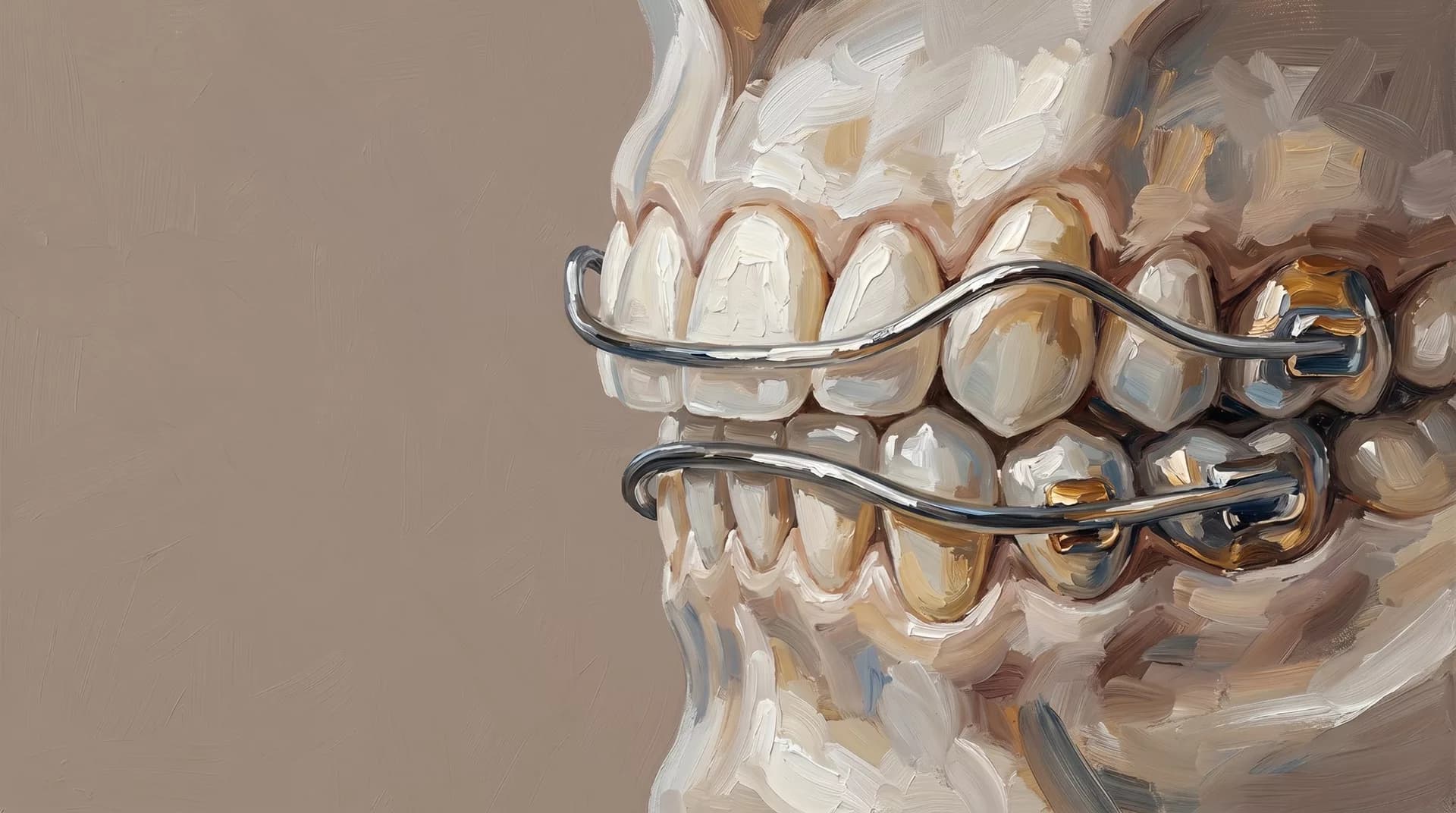
Bite Anomaly Correction
Malocclusion correction with braces, aligners, or orthognathic surgery.
Available sections:
Correction of Bite Anomalies
Bite anomalies are divided into dentoalveolar anomalies, which are related to the position of the teeth, and skeletal anomalies, which are related to the position of the jaw bones themselves. Orthodontic treatment is effective for the first group, but cannot correct the second: no braces can move the lower jaw forward or backward or change the shape of the upper jaw.
Skeletal anomalies are the indication for orthognathic surgery, meaning surgical correction of the bite. At Iskusstvo Clinic in Moscow, it is performed as part of comprehensive treatment together with an orthodontist.
Types of Skeletal Bite Anomalies
Skeletal Mandibular Prognathism, or Class III
The lower jaw is positioned forward relative to the upper jaw. The lower front teeth overlap the upper teeth or are positioned in front of them. The face is characterized by a prominent chin and a concave profile.
Chewing is impaired, and speech is often affected.
Mandibular Retrognathia, or Skeletal Class II
The lower jaw is underdeveloped or positioned backward. The lower teeth are significantly overlapped by the upper teeth.
The facial profile is often described as “bird-like”: a protruding upper lip and a recessed chin. This condition is often accompanied by breathing difficulty and sleep apnea syndrome.
Open Bite
The front teeth or side teeth do not meet when the mouth is fully closed. In severe cases, this is a skeletal form in which the shape of the bone itself is deformed.
Biting food is impaired, and speech may be affected, including interdental sigmatism.
Skeletal Crossbite
This is a mismatch between the width of the upper and lower dental arches due to abnormal development of one of the jaws.
In unilateral skeletal crossbite, facial asymmetry may be present.
Upper Jaw Anomalies
Pronounced protrusion or underdevelopment of the upper jaw, meaning maxillary prognathism or retrognathism, may occur either separately or in combination with lower jaw anomalies.
How Treatment Is Planned
At the initial consultation, the surgeon and orthodontist jointly analyze CT imaging of the facial skeleton, a teleradiograph, and digital models of the dental arches. Based on these data, a virtual model is created: cephalometric analysis with calculation of the required movements. The patient can see the predicted result before treatment begins.
Treatment consists of three stages.
Preoperative orthodontics lasts 6–18 months. During this stage, the dental arches are “decompensated,” meaning the teeth are moved into the position that corresponds to their correct position on the bone. This may intentionally worsen the bite, and this is normal: the surgeon will restore it during the operation.
The next stage is surgery.
After that, postoperative orthodontics lasts 3–6 months and is used for precise final adjustment.
Surgical Stage
The operation is performed under general anesthesia through intraoral approaches, without visible scars on the face. The surgeon cuts the bone, moves it into the planned position, and fixes it with titanium plates and screws.
In two-jaw operations, or bimaxillary surgery, both jaws are operated on at the same time.
The duration of surgery ranges from 2 to 5 hours, depending on the scope.
Rehabilitation
Hospitalization usually lasts 3–5 days.
Swelling is most pronounced during the first 3–5 days, decreases significantly by weeks 2–3, and resolves completely within 3–4 months.
A soft diet is prescribed for 6–8 weeks. Physical activity is limited for 4–6 weeks.
Work capacity usually returns 2–3 weeks after surgery.
The final result, including the bite and facial shape, forms by 6–12 months after surgery, after postoperative orthodontic treatment is complete.
Contraindications
Contraindications include incomplete growth of the facial skeleton, severe systemic diseases in the stage of decompensation, uncorrectable blood clotting disorders, and active inflammatory processes in the oral cavity.
The decision is made by the surgeon together with the orthodontist after a complete examination.
Frequently Asked Questions
Will My Voice Change After Jaw Surgery?
Jaw repositioning changes the configuration of the oral cavity and nasopharynx, which may affect voice timbre and pronunciation of certain sounds.
As a rule, these changes are minor and are perceived positively by patients. After adaptation over several months, speech fully normalizes.
Can Surgery Be Performed Without Preliminary Orthodontic Treatment?
In selected cases, a “surgery first” approach is possible, meaning surgery without long preoperative orthodontic preparation.
This approach is used for certain types of anomalies and is discussed individually by the surgeon and orthodontist.
Can the Bite Return to Its Previous Position After Surgery?
With proper planning and completion of all treatment stages, relapse is rare.
The bone is fixed with plates that hold it in the new position until complete healing. Postoperative orthodontics stabilizes the result.
Do the Plates Need to Be Removed After Surgery?
In most cases, no. Titanium plates remain permanently and do not interfere.
Removal is indicated in cases of infection or discomfort. This is decided individually by the surgeon.
Book a Consultation
Book a consultation. The surgeon and orthodontist will jointly assess the anomaly and create a treatment plan.
OUR SPECIALISTS
A team that continues the traditions of Professor A.I. Nerobeev's school. Our specialists not only practice but also teach, developing unique techniques in reconstructive and aesthetic medicine.

Leave your number and we will contact you