 My Account
 +7 (495) 129 37 00
 st. Derbenevskaya, 9
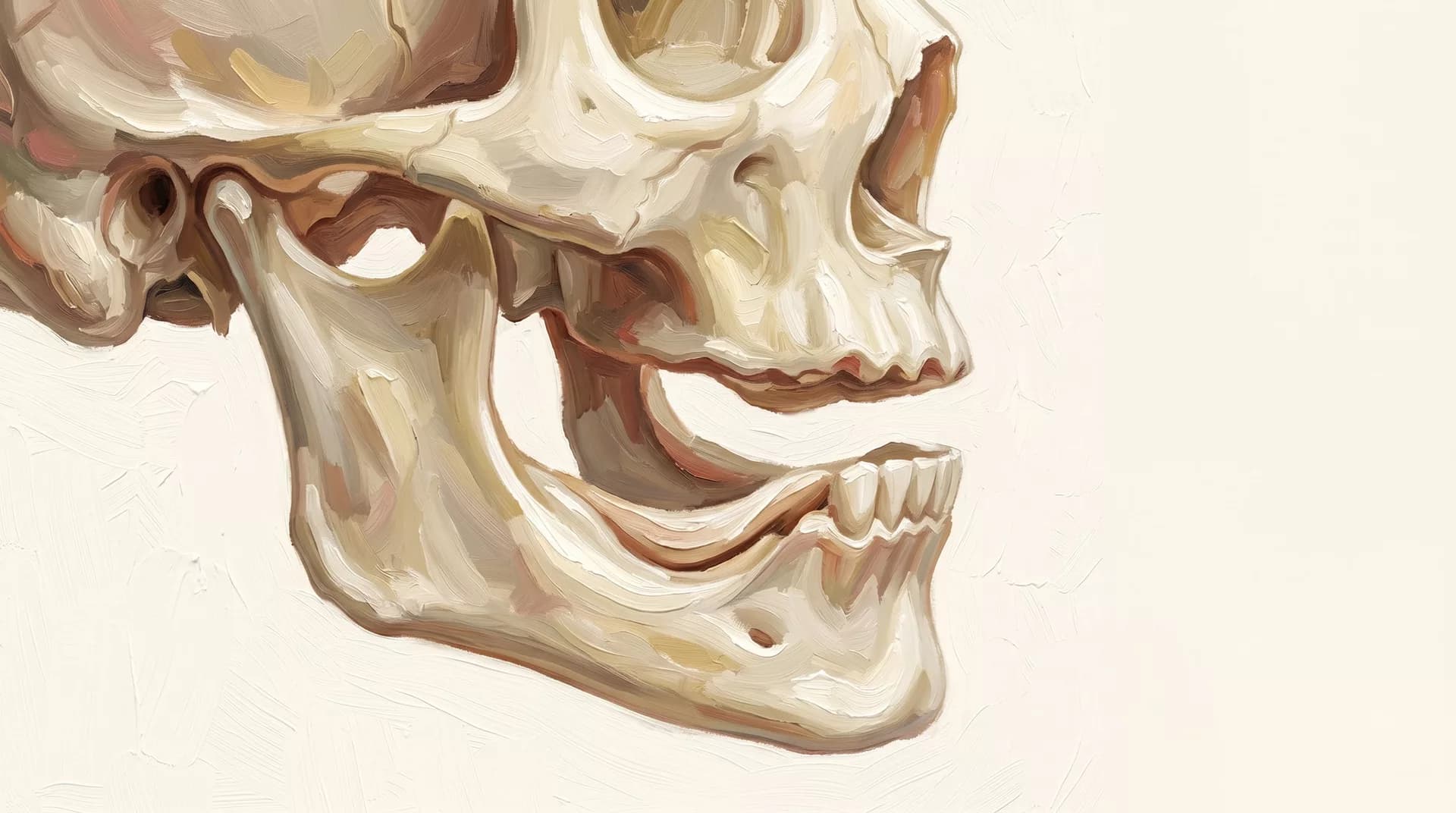
Prosthetics After Jaw Resection or Loss
Fabrication of removable obturator prostheses with clasps and implants for defect restoration.
Available sections:
Prosthetic Rehabilitation After Jaw Resection or Jaw Loss
Resection of the jaws—the surgical removal of part or all of the upper or lower jaw—is performed primarily for oncologic indications or following severe trauma. Such procedures can significantly impair chewing, speech, swallowing, and facial appearance.
Prosthetic rehabilitation helps restore lost functions and allows patients to eat, speak, and interact socially with greater confidence.
At Iskusstvo Clinic in Moscow, rehabilitation after jaw resection is planned jointly by the maxillofacial surgeon and the prosthodontist, ideally before the resection surgery itself.
Rehabilitation After Maxillary Resection
Removal of part or all of the upper jaw disrupts the separation between the oral and nasal cavities. As a result, speech may become hypernasal, while chewing and swallowing become difficult.
An obturator prosthesis closes the palatal defect and recreates the partition between the oral and nasal cavities, significantly improving these functions.
Immediate Obturator
An immediate obturator is fabricated before surgery and inserted during the operation.
It allows the patient to speak and eat during the early postoperative period and serves as a temporary solution while tissues heal.
As healing progresses, it is replaced with a definitive prosthesis.
Definitive Obturator
A definitive obturator is usually fabricated three to six months after surgery, once the tissues have stabilized.
It may be removable or supported by dental implants when adequate anchorage is available.
Implant-supported obturators provide substantially improved retention and stability, preventing displacement during speech and mastication.
Zygomatic Implants
In patients with extensive maxillary defects, placement of conventional dental implants may not be feasible.
In such situations, zygomatic implants can be used. These long implants engage the zygomatic bone and provide reliable support for a prosthesis even in cases of complete maxillary loss.
Rehabilitation After Mandibular Resection
The mandible is the structural foundation of the masticatory system.
Partial or complete loss of the lower jaw results in major disturbances of chewing, swallowing, speech, and facial contour.
Prosthetic rehabilitation of mandibular defects is generally more challenging than rehabilitation of maxillary defects.
Prostheses Supported by the Remaining Mandible
When a segment of the mandible is preserved, it may serve as support for a prosthetic restoration.
If sufficient bone volume remains, dental implants can be placed to improve retention and function.
Rehabilitation After Total Mandibulectomy
When the entire mandible has been removed, prosthetic options become limited because there is no bony foundation for conventional support.
Specialized prosthetic designs relying on the remaining soft tissues and, when possible, transcutaneous implants may be considered.
Although functional outcomes are less predictable than after partial resections, even partial restoration of speech and mastication can substantially improve quality of life.
Relationship Between Reconstruction and Prosthetic Rehabilitation
The preferred approach after mandibular resection is immediate or delayed reconstruction using a vascularized bone graft, most commonly a fibular free flap.
Once the reconstructed bone has healed, dental implants can be placed and prosthetic rehabilitation completed.
When reconstruction is not possible, prosthetic treatment is planned according to the quantity and quality of the remaining tissues.
Preoperative Planning
When a prosthodontist participates in treatment planning before jaw resection, the surgeon may adjust the extent and technique of the operation to preserve or create optimal support for future prostheses.
This interdisciplinary approach reduces the need for additional procedures and improves long-term functional outcomes.
At Iskusstvo Clinic, such collaborative planning is considered standard practice.
Rehabilitation
The timing of prosthesis fabrication and adaptation varies depending on the individual situation.
An immediate prosthesis is inserted on the day of surgery.
A definitive prosthesis is usually fabricated three to six months later.
Patients may also benefit from speech therapy and structured training in prosthesis use.
Regular follow-up appointments are necessary to adjust the fit of the prosthesis as tissues continue to remodel over time.
Contraindications
Contraindications include:
- Active oncologic disease that precludes planned prosthetic treatment
- Severe systemic diseases in the stage of decompensation
- Poor oral hygiene
- Other conditions that may compromise rehabilitation outcomes
The final decision regarding the feasibility and timing of prosthetic treatment is made jointly by the surgeon and the prosthodontist.
Book a Consultation
Book a consultation. The surgeon and prosthodontist will evaluate your condition together and develop an individualized rehabilitation plan aimed at restoring both function and appearance.
Часто задаваемые вопросы
Когда после операции можно начинать протезирование?
Непосредственный протез — в день операции. Постоянное протезирование — как правило, через 3–6 месяцев, когда послеоперационные ткани стабилизировались. При наличии имплантатных опор сроки зависят от остеоинтеграции — 2–6 месяцев.
Можно ли восстановить речь после резекции нижней челюсти?
Полное восстановление речи зависит от объёма резекции. При частичной — с хорошим протезом речь, как правило, восстанавливается до приемлемого уровня. Логопедическая коррекция ускоряет этот процесс. При тотальной резекции речь значительно нарушается; протезирование улучшает ситуацию, но полного восстановления достичь сложнее.
Нужна ли операция для протезирования челюсти?
Съёмное протезирование без имплантатов — не требует операции. Протезирование с опорой на имплантаты — требует хирургического этапа. Выбор зависит от анатомии, функциональных целей и пожеланий пациента.
Что лучше — реконструкция или протезирование?
При возможности — реконструкция собственными тканями даёт лучший долгосрочный результат: живая кость, возможность последующей имплантации, естественная форма лица. Протезирование — альтернатива при противопоказаниях к реконструкции или нежелании пациента переносить сложную операцию. Это решается на совместной консультации хирурга и ортопеда.
OUR SPECIALISTS
A team that continues the traditions of Professor A.I. Nerobeev's school. Our specialists not only practice but also teach, developing unique techniques in reconstructive and aesthetic medicine.
Leave your number and we will contact you