 My Account
 +7 (495) 129 37 00
 st. Derbenevskaya, 9
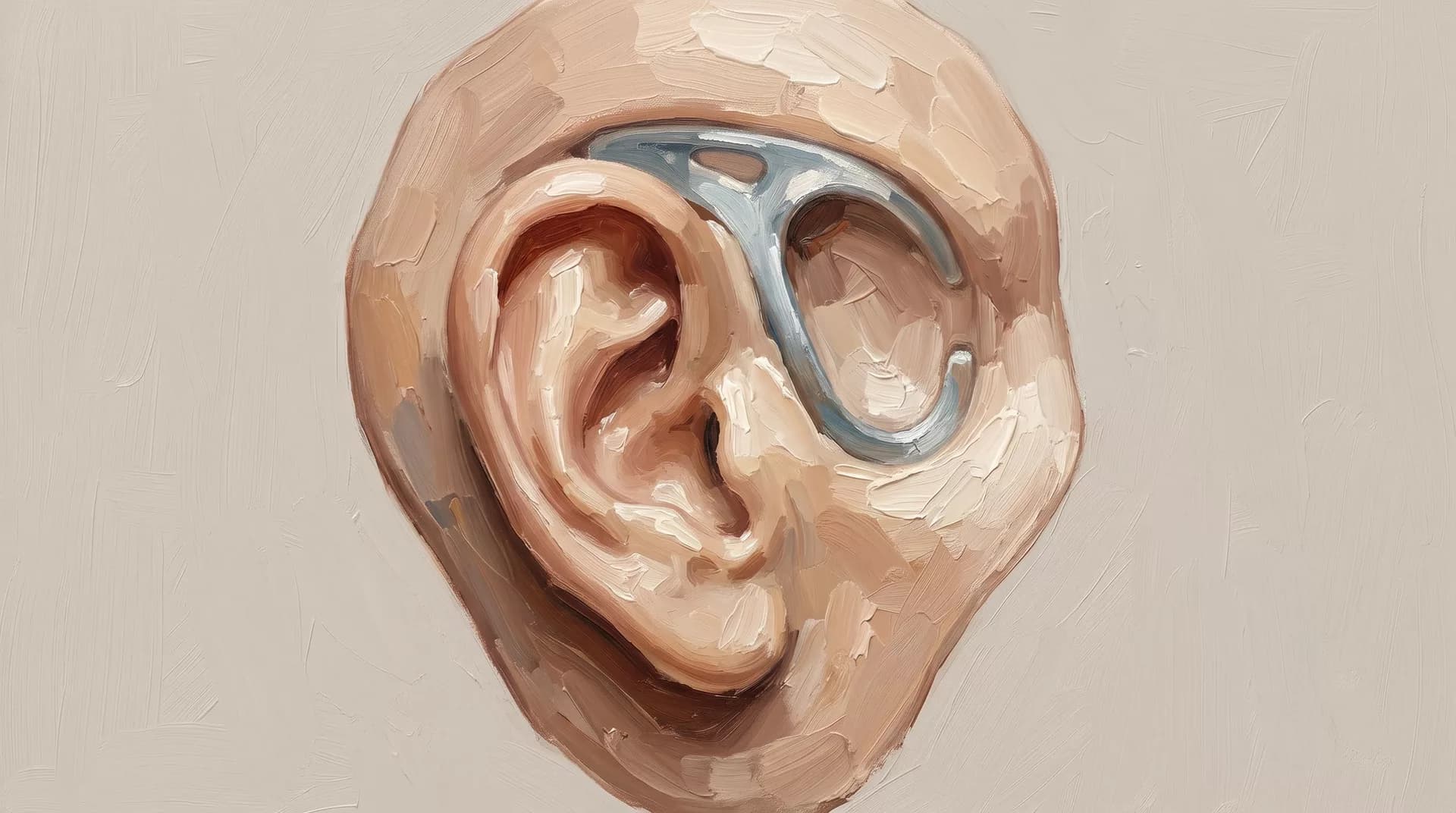
Use of Epitheses and Custom Implants
Silicone prostheses (epitheses) for nose, ears, orbits restoration and custom titanium implants for facial skeleton.
Available sections:
Facial Prostheses and Patient-Specific Implants
A facial prosthesis (epithesis) is an external replacement for a missing part of the face, such as the nose, ear, eye, orbit, or a combination of these structures. It is individually fabricated from medical-grade silicone to reproduce the shape, colour and texture of the lost anatomy as accurately as possible.
When properly manufactured and retained, modern facial prostheses are often virtually indistinguishable from natural tissues and allow patients with significant facial defects to return to everyday life without undergoing complex reconstructive surgery.
At Iskusstvo Clinic in Moscow, facial prosthetic rehabilitation is closely integrated with surgical treatment, which is particularly important when implant-supported retention is planned.
Types of Facial Prostheses
Nasal Prosthesis
A nasal prosthesis is indicated after partial or total nasal resection due to oncologic disease, severe trauma or congenital absence of the nose.
Because the nose is the most visually prominent facial structure, its loss is frequently associated with considerable psychological distress. A well-designed nasal prosthesis restores facial appearance and, when supported by implants, provides reliable daily function.
Auricular Prosthesis
An auricular prosthesis replaces the external ear after surgical removal or in patients with congenital deformities such as anotia or microtia, particularly when surgical reconstruction is not feasible or not desired.
Retention may be achieved with adhesive fixation or with percutaneous implant systems, including BAHA-type devices and similar solutions.
Ocular and Orbital Prostheses
An ocular prosthesis is used after removal of the eyeball.
An orbital prosthesis is indicated for larger defects involving the eyelids and surrounding orbital tissues.
Fabrication is performed in collaboration with an ocularist and an ophthalmologist.
Combined Prostheses
Extensive defects involving multiple anatomical regions, such as the nose and upper lip or the orbit and nose, may require a single combined prosthetic restoration.
These technically demanding prostheses are typically retained by multiple implants and require close coordination between the surgeon, prosthodontist and anaplastologist.
Methods of Retention
Medical Adhesives
Adhesive retention is the simplest approach and does not require surgery.
Patients apply the prosthesis themselves each morning.
Disadvantages include possible displacement during physical activity or hot weather, daily use of adhesive materials and accelerated degradation of silicone due to prolonged exposure to adhesive compounds.
Implant-Supported Retention
Small titanium implants are inserted through the skin into the underlying bone around the future prosthetic margins.
The prosthesis attaches to these implants using magnetic or mechanical retention systems.
Advantages include improved stability, greater comfort and a longer lifespan of the prosthesis because adhesive materials are no longer required.
Placement of retention implants is a minor surgical procedure usually performed under local anaesthesia.
Eyeglass Frame Retention
Orbital and nasal prostheses can also be attached to eyeglass frames.
This approach avoids surgery but provides less stability than implant-supported retention.
Patient-Specific Facial Skeleton Implants
In addition to implants used for prosthetic retention, patient-specific implants are employed to reconstruct bony contours of the face following tumour resection, trauma or severe deformity.
These implants are manufactured from titanium or medical-grade polyetheretherketone (PEEK) based on CT imaging and digital three-dimensional planning.
Unlike standard implants that often require intraoperative modification, patient-specific implants replicate the anatomy of the missing bone precisely, reducing operative time and improving accuracy.
Fabrication Process
The first stage involves obtaining impressions and standardized photographs.
The anaplastologist records the defect and, when appropriate, captures the corresponding structure on the healthy side to create a mirrored replica.
A wax prototype is then produced and reviewed with the patient before fabrication of the definitive prosthesis.
The final prosthesis is made from medical silicone and individually coloured to reproduce skin tone, vascular patterns, freckles and other subtle characteristics.
When necessary, eyelashes, eyebrows or other hair elements can be incorporated.
Manufacturing generally takes between two and six weeks, depending on the complexity of the restoration.
Care and Lifespan
Silicone prostheses require careful maintenance.
Daily cleaning with mild soap, storage in a humid environment and protection from direct sunlight are recommended, as ultraviolet radiation gradually degrades silicone and alters its colour.
The average service life of a silicone facial prosthesis is approximately two to four years, after which replacement is usually necessary.
Implant-retained prostheses often remain in good condition for longer periods because they are not exposed to adhesive materials.
Contraindications
Contraindications to placement of retention implants include:
- Active inflammation at the planned implant site
- Conditions associated with impaired wound healing, such as uncontrolled diabetes mellitus
- Long-term corticosteroid therapy
- Previous radiotherapy in the implant region, which requires careful evaluation and individualized treatment planning
Frequently Asked Questions
Will Other People Notice the Prosthesis?
In most cases, no.
Modern silicone prostheses reproduce very fine details, including skin texture, subtle vascular markings and individual surface characteristics.
With accurate adaptation and colour matching, the junction between the prosthesis and the surrounding skin is usually barely perceptible.
Can I Wear the Prosthesis Continuously?
It is generally recommended to remove the prosthesis at night to allow the skin to rest and to perform routine cleaning.
During the day, implant-supported prostheses are typically comfortable and secure.
Is Placement of Retention Implants Painful?
The procedure is performed under local anaesthesia and is painless.
Mild discomfort may persist for two to three days afterwards.
Although minor, this intervention often greatly improves comfort and quality of life for patients using facial prostheses.
What Happens If My Face Changes With Age or Weight Loss?
Significant changes in facial soft tissues caused by ageing or weight fluctuations may require adjustment or replacement of the prosthesis.
Annual follow-up visits help identify such changes early and allow timely modifications.
Can I Try an Adhesive Prosthesis Before Deciding on Implants?
Yes.
Many patients initially use an adhesive-retained prosthesis to assess its appearance and comfort.
If adhesive fixation proves inconvenient, implant-supported retention can be considered later.
Placement of retention implants does not interfere with continued use of the prosthesis.
Book a Consultation
Book a consultation. The surgeon and prosthetic rehabilitation specialist will evaluate your condition together and explain which rehabilitation option is most suitable for your individual situation.
OUR SPECIALISTS
A team that continues the traditions of Professor A.I. Nerobeev's school. Our specialists not only practice but also teach, developing unique techniques in reconstructive and aesthetic medicine.

Leave your number and we will contact you