 My Account
 +7 (495) 129 37 00
 st. Derbenevskaya, 9
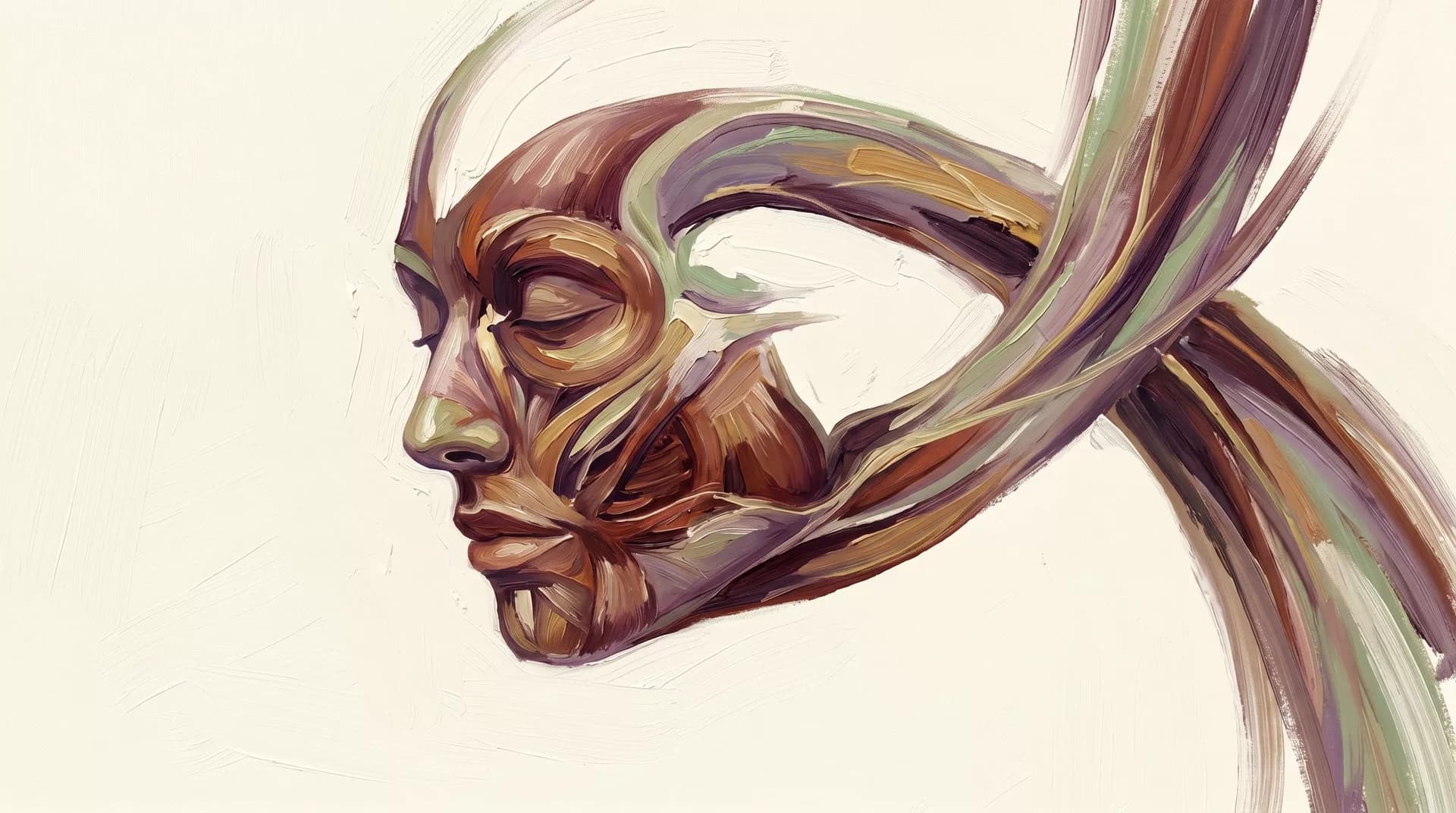
Elimination of Synkinetic Facial Muscle Movements
Pathological synkinesis treatment (involuntary movements post-facial nerve paresis recovery) using botulinum toxin, facial gymnastics, physiotherapy and selective hyperactive muscle relaxation.
Available sections:
Correction of Associated Movements of the Facial Muscles
Synkinesis, or associated movements, is a condition in which an attempt to perform one facial movement involuntarily causes another: the eye closes when smiling, the corner of the mouth rises when blinking, or the neck tightens during chewing. This is one of the most complex and psychologically distressing consequences of facial nerve paralysis. The nerve has recovered, movement has returned, but the face moves “incorrectly.”
At Iskusstvo Clinic in Moscow, treatment of synkinesis is a separate specialization that requires a precise understanding of neuroanatomy and the biomechanics of facial expression.
Why Synkinesis Occurs
When the facial nerve is damaged and then regenerates, nerve fibers grow back, but not always to their “own” muscles. Fibers that were supposed to innervate the muscle that lifts the corner of the mouth may grow toward the circular muscle of the eye.
As a result, when the patient tries to smile, the eye closes.
Synkinesis develops in a significant number of patients who have experienced Bell’s palsy or surgery involving the facial nerve.
Types of Synkinesis
Oculo-oral synkinesis: the eye closes involuntarily during mouth movement
Oro-ocular synkinesis: the corner of the mouth rises during blinking
Cervicofacial synkinesis: the platysma, or superficial neck muscle, tightens during facial movements
Masticatory-facial synkinesis: involuntary facial movements occur during chewing
Crocodile tears, or Bogorad syndrome: tearing during chewing caused by aberrant regeneration of nerve fibers toward the lacrimal gland
Treatment Methods
Botulinum Therapy
Injection of botulinum toxin into hyperactive muscles reduces the severity of synkinesis and helps “reset” the movement pattern.
This is a non-surgical method. The effect lasts 3–6 months. With regular use in combination with facial exercises, stable improvement is possible as the brain gradually relearns the correct movement pattern.
Selective Neurolysis
Selective neurolysis is a surgical procedure in which the branches of the facial nerve responsible for unwanted movements are selectively divided. This helps eliminate synkinesis without impairing necessary movements.
The method requires precise mapping of the nerve branches.
Myectomy
Myectomy involves partial removal or weakening of the muscle that causes unwanted movement. It is used in pronounced synkinesis that does not respond to other methods.
Facial Biofeedback Therapy
Facial biofeedback therapy is a specialized rehabilitation program aimed at retraining facial movements. It is effective in combination with botulinum therapy.
The patient learns to control movements that previously occurred involuntarily.
Rehabilitation
Non-surgical treatment, such as botulinum therapy combined with facial exercises, does not require hospitalization.
After surgical treatment, including neurolysis or myectomy, hospitalization usually lasts 3–5 days, and swelling resolves within 1–2 weeks.
Facial exercises are a mandatory part of rehabilitation with any treatment method.
Contraindications
For botulinum therapy, contraindications include neuromuscular diseases, individual intolerance to the medication, pregnancy, and breastfeeding.
For surgical treatment, general surgical contraindications apply.
The final list of contraindications is determined by the surgeon during the consultation.
Frequently Asked Questions
Is Synkinesis Permanent?
Not necessarily. With timely and properly selected treatment, significant improvement is possible.
Early botulinum therapy combined with facial exercises is especially effective. When started soon after synkinesis appears, it reduces the risk of the incorrect movement pattern becoming fixed.
How Many Botulinum Toxin Injections Are Needed?
As a rule, injections are repeated every 3–6 months. Over time, in some patients the interval increases or the need for injections decreases if the brain successfully relearns the movement pattern through facial exercises.
The exact regimen is determined by the surgeon.
Do Facial Exercises Help with Synkinesis?
Yes. Facial exercises are a mandatory component of treatment.
They do not eliminate synkinesis on their own, but in combination with botulinum therapy or after surgical treatment, they help form the correct movement pattern.
Book a Consultation
Book a consultation. The surgeon will assess the type of synkinesis and select the optimal treatment method.
OUR SPECIALISTS
A team that continues the traditions of Professor A.I. Nerobeev's school. Our specialists not only practice but also teach, developing unique techniques in reconstructive and aesthetic medicine.


Leave your number and we will contact you