 My Account
 +7 (495) 129 37 00
 st. Derbenevskaya, 9
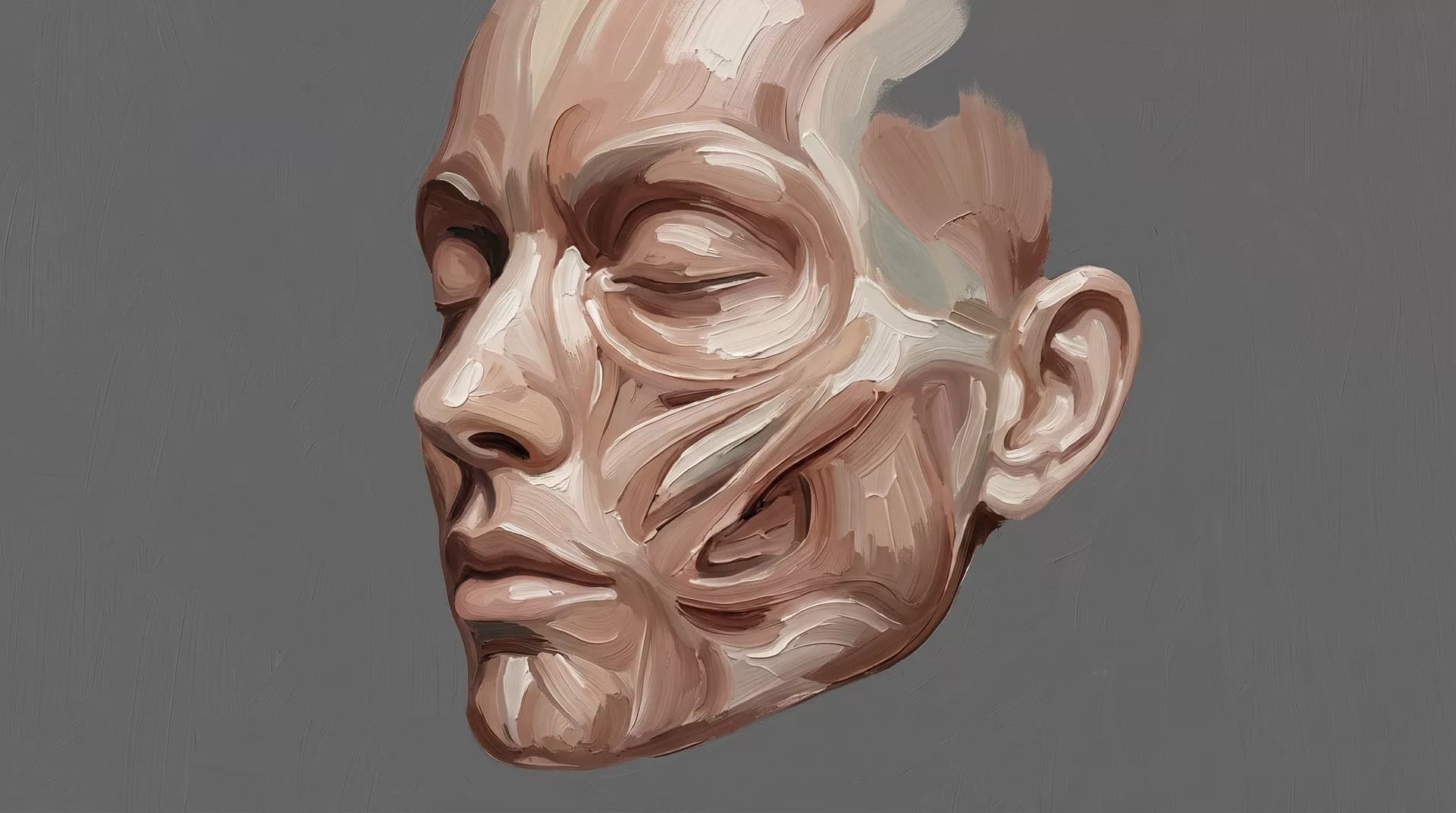
Correction of Asymmetric Facial Movements
Microsurgical facial nerve reconstruction restores symmetry of facial expressions in cases of paresis and paralysis.
Available sections:
Correction of Asymmetric Facial Movements
Facial expression asymmetry is a condition in which one side of the face moves differently from the other: one corner of the mouth rises less when smiling, one eyebrow does not lift when surprised, or one cheek does not participate in movement during chewing. The causes may vary, including partial facial nerve paralysis, consequences of trauma or surgery, or congenital features. At Iskusstvo Clinic in Moscow, correction of facial expression asymmetry is planned individually: the surgeon first identifies the cause and only then recommends a treatment method.
Causes of Facial Expression Asymmetry
Partial facial nerve paralysis after neuritis, trauma, or surgery
Incomplete recovery after Bell’s palsy with residual weakness on one side
Synkinesis, or associated movements that create functional asymmetry
Congenital asymmetry of the facial muscles
Consequences of scar changes in facial tissues
Atrophy of facial muscles on one side
Diagnostics
Before treatment planning, electroneuromyography, or ENMG, is performed. This study makes it possible to assess nerve impulse conduction and the condition of the facial muscles.
In addition, video recording of facial expression at rest and during movement is performed to accurately assess the nature and degree of asymmetry.
Based on the examination results, the surgeon determines the cause and recommends a specific treatment plan.
Treatment Methods
Botulinum Therapy
In cases of functional asymmetry caused by hyperactivity of the muscles on the healthy side or by synkinesis, botulinum therapy can temporarily reduce excessive movements and improve symmetry.
This is a non-surgical method. The effect lasts 3–6 months and requires repeat procedures. It is often used as the first stage or as an addition to surgical treatment.
Surgical Correction
In cases of pronounced weakness of the facial muscles on one side, surgical redistribution of muscle traction may be performed: muscle transposition, or repositioning, or fixation of muscles in a new position.
The goal is to create balance between the two sides of the face both at rest and during movement.
Static Methods
In cases of persistent weakness without prospects for restoration of nerve conduction, static correction methods are used: suspension of the mouth corner, correction of eyebrow position, and fascial slings.
These methods do not restore active movement, but they significantly improve facial symmetry at rest.
Combined Approach
In most cases, the optimal result is achieved through a combination of methods, for example, surgical correction of tissue position together with botulinum therapy to suppress synkinesis.
The specific combination is determined individually by the surgeon.
Rehabilitation
After surgical procedures on the facial muscles, hospitalization usually lasts 3–7 days. Swelling resolves within 2–4 weeks.
Facial exercises begin 4–6 weeks after surgery and play an important role in forming the correct movement pattern.
The final result is assessed after 6–12 months.
Contraindications
Contraindications include severe systemic diseases in the stage of decompensation and active infectious processes.
For botulinum therapy, contraindications include individual intolerance to the product and neuromuscular diseases.
The final list of contraindications is determined by the surgeon during the consultation.
Frequently Asked Questions
Can Facial Expression Asymmetry Be Corrected Without Surgery?
In some cases, yes. If asymmetry is caused by hyperactivity on one side or by synkinesis, botulinum therapy can provide a good result without surgery.
In cases of pronounced muscle weakness, non-surgical methods are less effective. This is determined during an in-person consultation after ENMG.
Do Facial Exercises Help with Asymmetry?
It depends on the cause. In functional weakness, facial exercises can help as an auxiliary method.
In complete paralysis without restoration of nerve conduction, exercises alone will not change the situation, but they are important as part of rehabilitation after surgery.
Will Surgery Correct the Asymmetry Completely?
The realistic goal is significant improvement of symmetry, not absolute symmetry. Perfect facial symmetry does not exist even in healthy people.
The surgeon discusses the expected result in advance so that the patient understands what to expect.
Book a Consultation
Book a consultation. The surgeon will identify the cause of asymmetry and recommend the optimal treatment plan.
OUR SPECIALISTS
A team that continues the traditions of Professor A.I. Nerobeev's school. Our specialists not only practice but also teach, developing unique techniques in reconstructive and aesthetic medicine.
Leave your number and we will contact you