 My Account
 +7 (495) 129 37 00
 st. Derbenevskaya, 9
Nerve Removal -
Vital extirpation under anesthesia: complete pulp removal with special instruments followed by canal processing and filling.
Available sections:
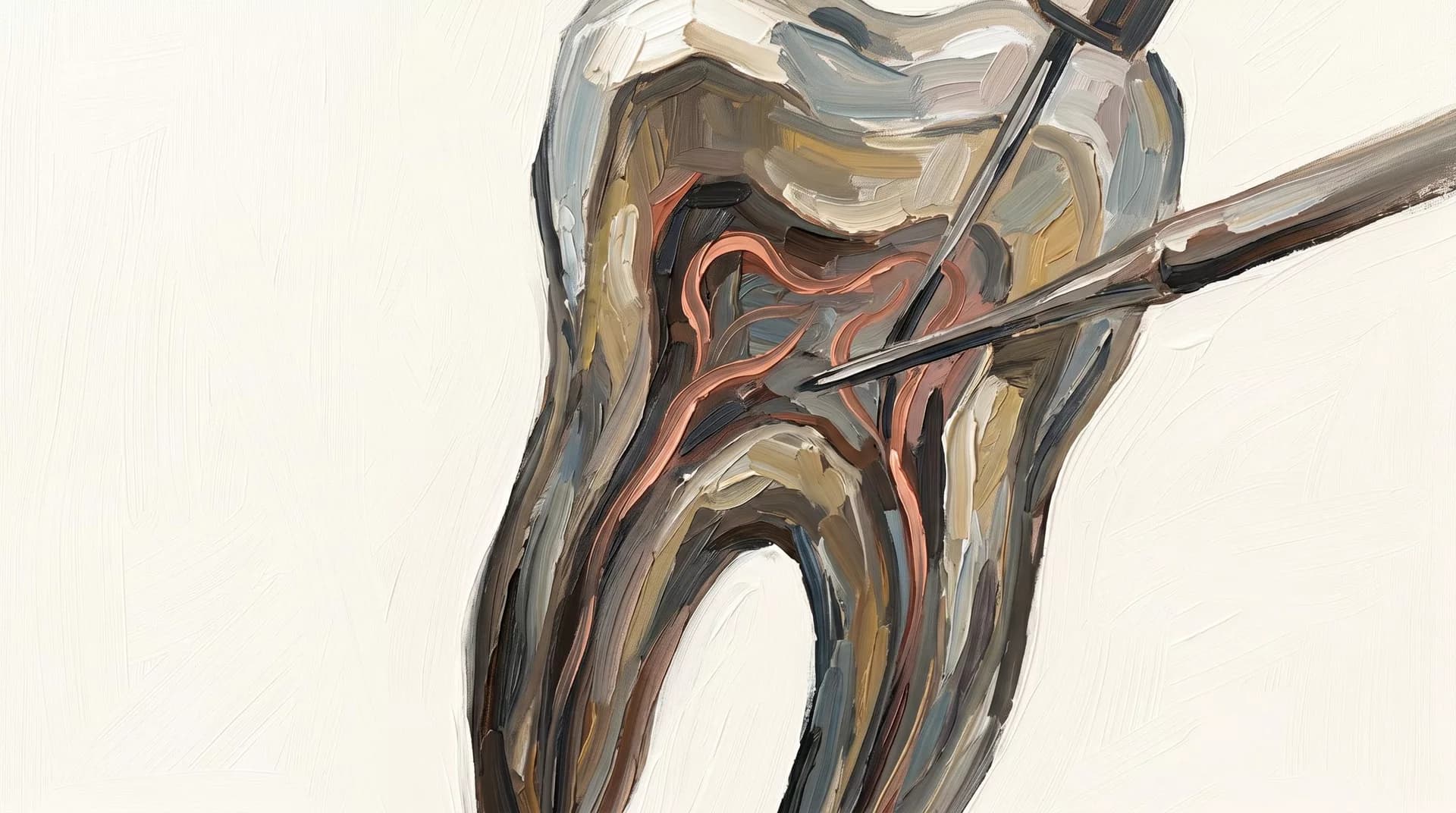
Nerve removal is the everyday term for pulpectomy: the surgical removal of the pulp — the neurovascular bundle that fills the tooth's pulp chamber and root canals. The pulp performs nutritive, sensory, and protective functions, but once it becomes severely inflamed or necrotic, it can no longer be preserved: the infected pulp turns into a focus of chronic infection that threatens both the tooth itself and the surrounding tissues.
Nerve removal is a standard procedure performed for pulpitis and a number of other indications. The quality of this intervention determines whether the tooth will last for many more years or become a source of problems. At Iskusstvo Clinic, pulpectomy is performed under an operating microscope in accordance with current endodontic protocols.
When Nerve Removal Is Necessary
-
Acute or chronic pulpitis — inflammation of the pulp that cannot be reversibly resolved
-
Pulp necrosis — death of pulp tissue without signs of inflammation, often following trauma
-
Acute and chronic periodontitis — inflammation beyond the root apex requiring canal debridement
-
Deep caries with irreversible pulp damage
-
Preparing a tooth for prosthetics — in certain clinical situations, at the doctor's discretion
How Nerve Removal Is Performed
Anesthesia
Local anesthesia is administered before the procedure. For lower molars, an inferior alveolar nerve block is used; for upper teeth, infiltration anesthesia is applied. In cases of severe inflammation, where standard anesthesia may be insufficient, intraligamentary or intraosseous technique is used. Patients with dental phobia or those requiring extensive treatment can be treated under sedation.
Isolation of the Working Field
A rubber dam — a latex sheet secured with a metal clamp — is placed on the tooth. Isolation is mandatory: it protects the open canals from contamination by saliva and prevents small instruments from being swallowed.
Opening the Tooth Cavity
A bur is used to create an access cavity in the tooth crown, opening the way into the pulp chamber. The roof of the pulp chamber is fully removed, providing straight-line access to the openings of all canals.
Pulp Removal
The pulp is removed from the tooth cavity and canals using pulp extractors and endodontic files. The volume of tissue removed depends on the clinical situation: in vital pulpectomy (living pulp), removing the blood requires careful technique without excessive trauma; with necrotic pulp, the canal contents are looser but are often accompanied by odor and require thorough irrigation.
Instrumental and Chemical Treatment
After the bulk of the pulp is removed, the canals are sequentially treated with files of increasing size along with irrigation using sodium hypochlorite and EDTA. Ultrasonic activation of the solutions completes the cleaning. Working length is verified with an apex locator and radiographically.
Filling or Medicated Dressing
In uncomplicated pulpitis, the canals are filled during the same visit. In cases of periodontitis, significant exudate, or signs of periapical inflammation, a temporary calcium hydroxide dressing is placed in the canal and filling is postponed to the next visit.
After Nerve Removal
For a few days after the procedure, tenderness when biting down is possible — a reaction of the periodontal tissues to mechanical stress. This is not a complication but a normal reaction. The pain decreases each day; if it increases, or if swelling or fever appears, you should see a doctor. Chewing load on the tooth should be limited until the final restoration is placed.
The Fate of a Tooth After Nerve Removal
After pulpectomy, a tooth loses its nutrient supply from the pulp but continues to receive nutrients from the periodontium — the tissues surrounding the root. It remains alive and functional but becomes more brittle: without the pulp, dentin loses some of its elasticity. For this reason, molars with significant loss of hard tissue are recommended to receive orthopedic coverage — a crown or inlay. This significantly extends the tooth's service life.
Frequently Asked Questions
Is Nerve Removal Painful?
With proper anesthesia — no. Pain can only occur if the anesthesia turns out to be insufficient; in that case, the doctor will add more before continuing. You should not have to endure pain during the procedure — tell your doctor immediately.
Can the Nerve Be Left in Place Instead of Removed?
In some cases, vital pulpotomy is used: removal of only the coronal pulp while preserving the root pulp. This is possible with reversible pulpitis in young patients whose root formation is not yet complete. With irreversible pulpitis or necrosis, preserving the pulp is not possible — it would lead to progression of the inflammation.
How Long Does the Procedure Take?
For a single canal — 40–60 minutes; for multi-canal teeth — 60–90 minutes or more. This includes anesthesia, isolation, canal treatment, and filling or placement of a dressing.
Will the Tooth Darken After Nerve Removal?
Darkening of the tooth after pulpectomy is not inevitable. It occurs when blood pigments are not adequately removed from the pulp chamber or when certain outdated materials are used. With a modern protocol, thorough irrigation, and correct choice of restorative materials, the tooth's color is preserved.
Is a Crown Needed After Nerve Removal?
For molars with significant loss of hard tissue, it is strongly recommended. A crown or inlay reduces the risk of tooth fracture, which is higher in pulpless teeth than in vital ones. For front teeth, the decision is made on an individual basis.
OUR SPECIALISTS
A team that continues the traditions of Professor A.I. Nerobeev's school. Our specialists not only practice but also teach, developing unique techniques in reconstructive and aesthetic medicine.


PRICING
Transparent pricing system. The final cost is determined after consultation and includes full medical support.
01
01
Инструментальная и медикаментозная обработка корневого канала(повторная обработка канала)

Leave your number and we will contact you