 My Account
 +7 (495) 129 37 00
 st. Derbenevskaya, 9
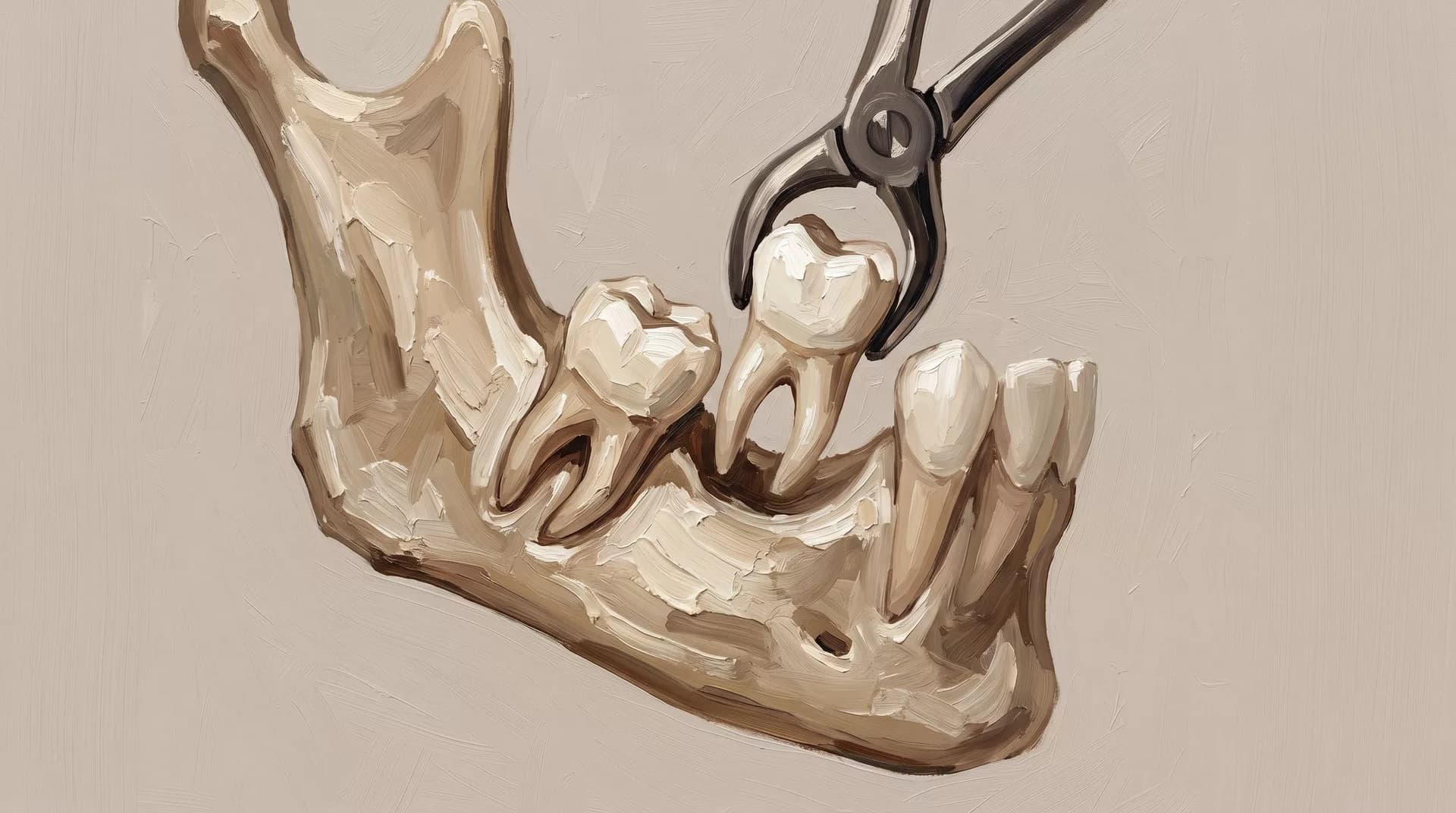
Tooth Extraction (Including Impacted and Malpositioned)
Surgical removal of wisdom teeth, impacted, and ectopic teeth with gum incision and suturing.
Available sections:
Tooth Extraction
Tooth extraction is the most commonly performed procedure in surgical dentistry. Most extractions are quick and uncomplicated. However, there are cases where standard instruments and skills are not enough: impacted wisdom teeth, teeth with curved or fused roots, and teeth located close to the mandibular canal or the floor of the maxillary sinus.
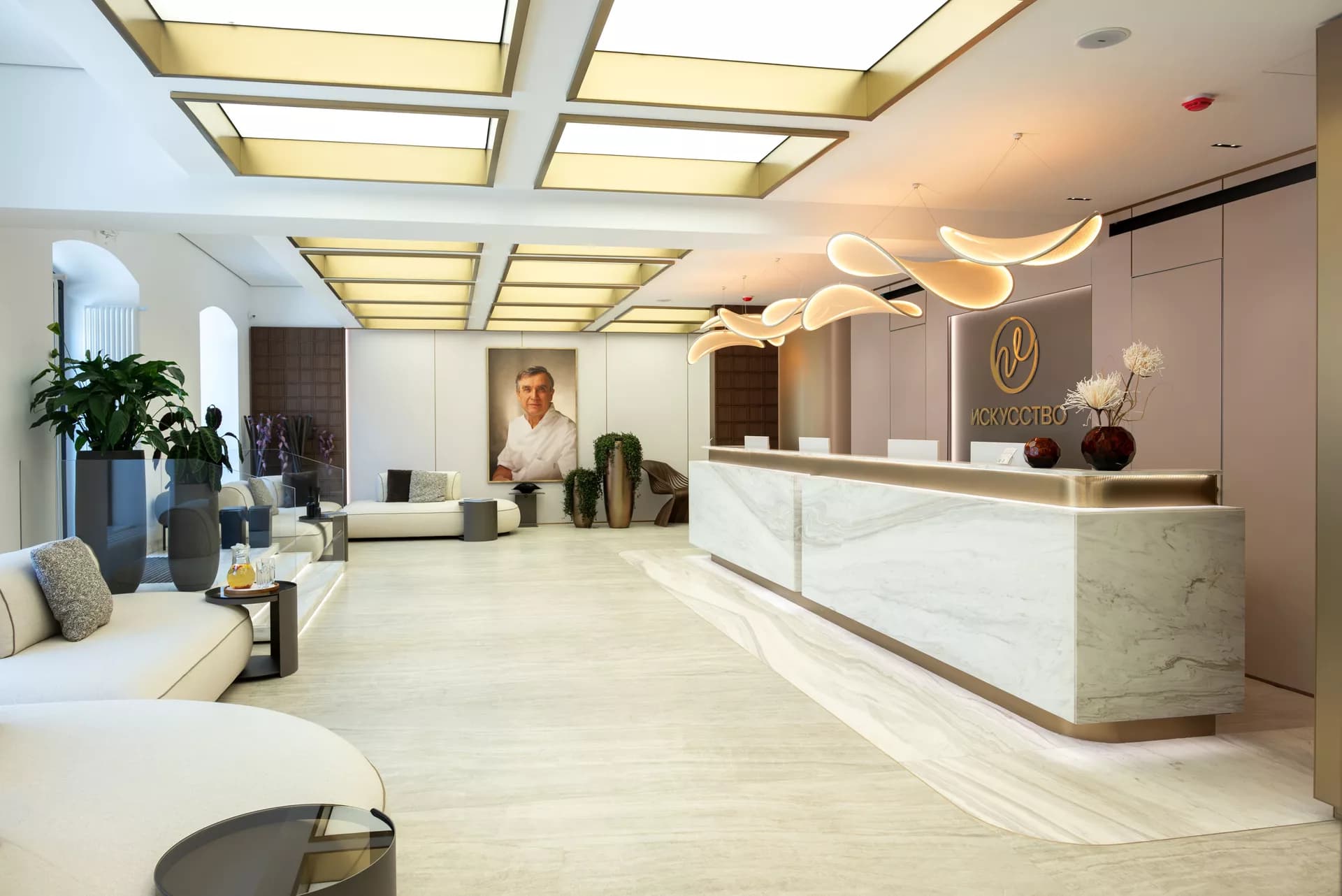
For such situations, Iskusstvo Clinic in Moscow has a maxillofacial surgeon: a specialist who knows how to work in complex anatomical conditions.
Types of Extraction
Simple Extraction
This is removal of an erupted tooth without surgical incision of the gum. It is performed under local anesthesia and takes only a few minutes.
It is used for mobile teeth, destroyed roots, and teeth with straight roots without signs of complications.
Complex Extraction
This requires incision of the gum and often removal of part of the bone or sectioning the tooth into fragments.
It is used for teeth with curved or hypercementosed, meaning thickened, roots, roots fused with the bone, or ankylosis, broken roots, and teeth under crowns or bridges.
Removal of Impacted Teeth
An impacted tooth is a tooth that has not erupted and is fully or partially located within the bone. Most often, these are third molars, or wisdom teeth, and upper canines.
The operation includes an incision of the gum, removal of part of the bone above the tooth, and, if necessary, sectioning the tooth into parts. After removal, the wound is sutured.
The complexity of the operation depends on the position of the tooth: horizontal or angled position, proximity to the mandibular canal, which creates risk for the inferior alveolar nerve, and proximity to the floor of the maxillary sinus. All of this requires preliminary assessment using CT imaging.
Removal of Dystopic Teeth
A dystopic tooth is an erupted tooth that occupies an incorrect position in the dental arch. It may press on neighboring teeth, cause pain, disturb the bite, or lead to inflammation.
Removal is planned individually depending on the position of the tooth.
Preparation and Diagnostics
Before removal of complex teeth, a targeted X-ray or CT scan is mandatory.
CT imaging is especially important when removing lower wisdom teeth, in order to assess the distance to the mandibular canal, and upper wisdom teeth, in order to assess proximity to the maxillary sinus.
Based on the images, the surgeon plans the technique and informs the patient about possible risks.
Anesthesia
Extraction is performed under local anesthesia. In cases of pronounced anxiety, multiple extractions, or at the patient’s request, intravenous sedation is possible. The patient remains relaxed and drowsy, does not experience anxiety, and still maintains contact with the doctor.
More information is available in the Anesthesia section.
Rehabilitation
After simple extraction, healing takes 7–10 days, with reduced load on the extraction area for 2–3 days.
After complex extraction or removal of an impacted tooth, swelling may last 3–5 days, and discomfort may persist for 1–2 weeks.
The surgeon provides written recommendations for socket care.
Important: after tooth extraction, bone tissue in this area begins to atrophy. If implant placement is planned, the surgeon discusses the timing and the possible need for bone grafting in advance.
Contraindications
Acute inflammatory processes, such as gumboil or periostitis, are not an absolute contraindication, but they may change the treatment plan.
Blood clotting disorders and anticoagulant therapy require coordination with a therapist.
During pregnancy, extraction is performed only for emergency indications, preferably in the second trimester.
The full list of contraindications is determined by the surgeon.
Frequently Asked Questions
Is It Always Necessary to Remove Wisdom Teeth If They Do Not Cause Discomfort?
Not always. A properly erupted wisdom tooth that can be cleaned well may be left in place.
Indications for removal include incorrect position with pressure on a neighboring tooth, recurrent inflammation, or pericoronitis, caries that cannot be treated because of anatomy, and a cyst in the tooth area.
The decision is made after examination and X-ray imaging.
How Painful Is Removal of an Impacted Tooth?
The operation itself is painless due to local anesthesia.
After the anesthesia wears off, moderate pain may occur. It is controlled with standard pain medication, such as ibuprofen or paracetamol.
The intensity depends on the complexity of the operation and individual characteristics.
OUR SPECIALISTS
A team that continues the traditions of Professor A.I. Nerobeev's school. Our specialists not only practice but also teach, developing unique techniques in reconstructive and aesthetic medicine.
PRICING
Transparent pricing system. The final cost is determined after consultation and includes full medical support.
01
01
Удаление постоянного зуба (первая категория сложности)
02
02
Удаление постоянного зуба (вторая категория сложности)
03
03
Удаление постоянного зуба (удаление зуба мудрости простое)
04
04
Удаление постоянного зуба (удаление зуба мудрости сложное)
05
05
Операция удаления ретинированного, дистопированного или сверхкомплектного зуба (первая категория сложности)
06
06
Операция удаления ретинированного, дистопированного или сверхкомплектного зуба (вторая категория сложности)
07
07
Операция удаления ретинированного, дистопированного или сверхкомплектного зуба (декоронация)
08
08
Удаление постоянного зуба (первая категория сложности)
09
09
Удаление постоянного зуба (вторая категория сложности)
10
10
Удаление постоянного зуба (удаление зуба мудрости простое)
11
11
Удаление постоянного зуба (удаление зуба мудрости сложное)
12
12
Операция удаления ретинированного, дистопированногоили сверхкомплектного зуба (первая категория сложности)
13
13
Операция удаления ретинированного, дистопированногоили сверхкомплектного зуба (вторая категория сложности)
Leave your number and we will contact you