 My Account
 +7 (495) 129 37 00
 st. Derbenevskaya, 9

Orthopedics (Tooth Prosthetics)
Tooth row restoration with fixed (crowns, bridges on teeth/implants) and removable prostheses (acrylic, clasp).
Available sections:
Dental prosthetics is the restoration of missing or severely damaged teeth using artificial structures that reproduce the shape, function, and aesthetics of natural teeth. Modern prosthetic dentistry in Moscow includes a wide range of solutions, from a single crown or inlay to full implant-supported prosthetic rehabilitation with digital smile design. The choice of restoration depends not only on the clinical situation, but also on aesthetic goals, budget, and patient preferences.
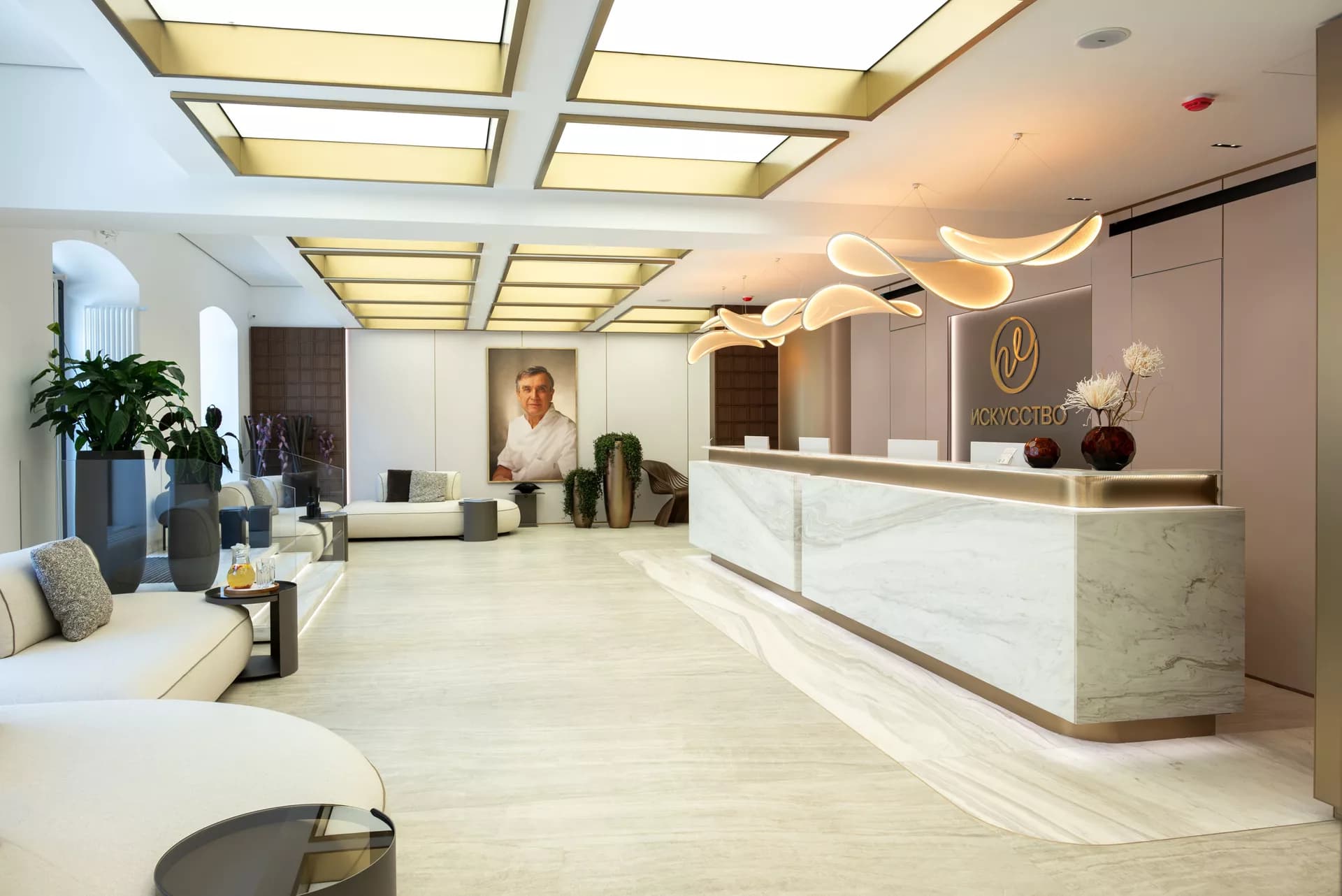
At Iskusstvo Clinic, prosthetic treatment is performed by a prosthodontist in close cooperation with an implant surgeon. Thanks to a unified surgical and dental space, 4,000 square meters, 5 operating rooms, and 12 patient rooms, the patient receives a comprehensive solution without referral to outside institutions: from implant placement and bone grafting to final prosthetic restoration by one team.
Types of Dental Prosthetics
Dental crowns: ceramic, metal-ceramic, zirconia, and CAD/CAM crowns. A fixed restoration that fully covers the crown portion of the tooth. It is used when the tooth is significantly damaged, after endodontic treatment, or to restore shape and color. More details are available on the Dental Crowns page.
Implant-supported prosthetics: a crown, bridge, bar-retained prosthesis, or fixed prosthesis on implants. This is an optimal solution for missing teeth of any scale, from one tooth to complete edentulism. More details are available on the Implant-Supported Prosthetics page.
Removable dentures: partial or complete removable restorations when several or all teeth are missing. More details are available on the Removable Dentures page.
Crown replacement and removal: removal of old restorations for repeat prosthetic treatment. More details are available on the Crown Replacement and Removal page.
Build-up tooth restoration: rebuilding the damaged part of a tooth with composite material or a fiberglass post to create support for a crown. More details are available on the Build-Up Restoration page.
E-max inlays: pressed glass-ceramic intracoronal inlays used to restore the chewing surface. More details are available on the E-max Inlays page.
Adhesive prosthetics: no-prep or minimally invasive restoration using adhesive bridges and overlays. More details are available on the Adhesive Prosthetics page.
Microprosthetics: minimally invasive inlays, overlays, and veneers. More details are available on the Microprosthetics page.
Post crowns: restoration of a severely damaged tooth using a cast or fiberglass post as intraradicular support. More details are available on the Post Crowns page.
Core build-up posts: a cast metal or zirconia core build-up as an alternative to a post when the root is significantly damaged. More details are available on the Core Build-Up page.
Temporary crowns, direct and laboratory methods: protection of the prepared tooth and preservation of aesthetics while the permanent restoration is being fabricated. More details are available on the corresponding pages.
How the Prosthetic Method Is Chosen
The prosthodontist evaluates the clinical situation comprehensively: the condition of the pulp and root, the extent of destruction, the bite, the presence and quality of implants, and aesthetic expectations. For each situation, several valid solutions may exist. The doctor explains the advantages and limitations of each option, allowing the patient to make an informed choice. At Iskusstvo Clinic, Digital Smile Design, DSD, is used so the patient can see the expected result before treatment begins.
Treatment Stages
1. Consultation and diagnostics. Examination, X-ray, either periapical or panoramic, and if necessary CBCT, impressions or 3D scanning. Preliminary treatment may be required, including endodontics, implant placement, or periodontology.
2. Preparation. The tooth or implant is prepared for the restoration: crown preparation, shoulder formation, or abutment placement.
3. Temporary prosthetics. A temporary crown protects the tooth and preserves aesthetics while the permanent restoration is fabricated, from 3 days to several weeks.
4. Fabrication. The permanent restoration is made by a dental technician or in a CAD/CAM system based on an impression or 3D scan. The usual timeframe is 7–14 working days.
5. Fixation. Try-in, occlusion adjustment, and fixation with cement or screws.
6. Follow-up. After 3–6 months, a control examination is performed to check the bite and tissue condition.
Contraindications to Prosthetic Treatment
- Untreated inflammatory lesions in the oral cavity, including caries, periodontitis, or apical periodontitis, which must be resolved before prosthetics.
- Poor oral hygiene: prosthetic treatment without sanitation sharply reduces the lifespan of restorations.
- Pathological mobility of supporting teeth, which requires preliminary periodontal preparation.
Why Iskusstvo Clinic
Surgery and Prosthetics Under One Roof
The prosthodontist and implantologist work together from planning to final restoration. This prevents mismatch between the surgical and prosthetic stages, a common cause of problems when these specialists work in different clinics.
CAD/CAM Technologies
Digital scanning and milling of zirconia and ceramic restorations provide precise fit and predictable aesthetics. Digital Smile Design, DSD, allows the expected result to be approved with the patient before preparation begins.
Gnathological Control
Before and after prosthetic treatment, occlusion and TMJ function are assessed. This protects new restorations from premature wear and reduces the risk of parafunctions.
Frequently Asked Questions
What is better: a crown or a veneer?
A crown covers the entire tooth and is indicated when the tooth is significantly damaged or after endodontic treatment. A veneer is a thin shell that covers only the front surface of a vital tooth. The key question is how much native tooth tissue remains. The more tissue is preserved, the more preferable a minimally invasive solution becomes, such as a veneer or inlay.
How long do dental crowns last?
Metal-ceramic crowns usually last 10–15 years with proper hygiene. Zirconia crowns can last 15–20 years or longer. Lifespan depends on hygiene, bite, bruxism, and the quality of cementation. An annual check-up helps detect problems in time.
How long does it take to make a permanent crown?
With the traditional method, fabrication takes 7–14 working days. With CAD/CAM milling, it may be possible to make a crown in 1–2 days. A temporary crown is placed for the fabrication period.
Does the tooth need to be devitalized before a crown?
No. This is an outdated practice. The modern protocol aims to preserve the vital pulp when there is sufficient tooth tissue. Devitalization is performed only in the presence of inflammation or anatomical necessity, such as excessive root convergence or inability to prepare the tooth safely.
OUR SPECIALISTS
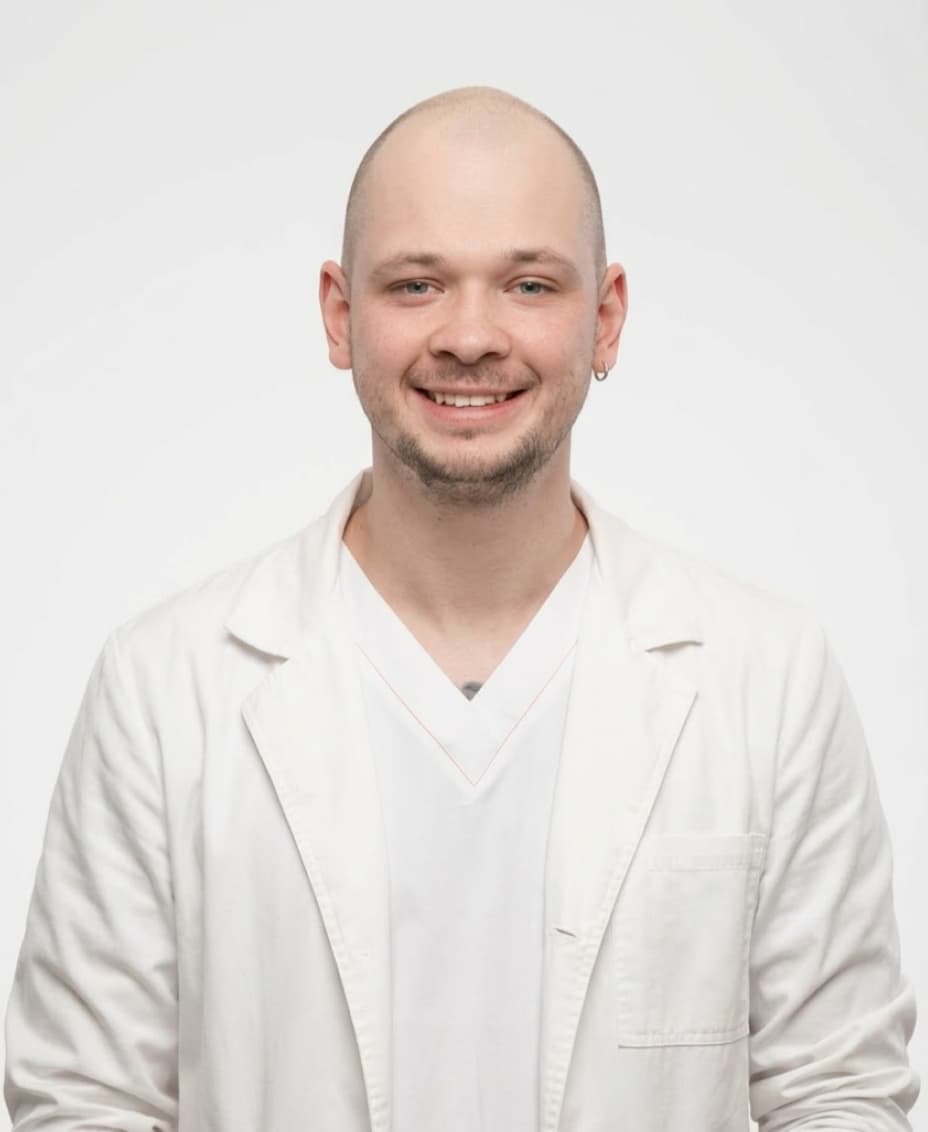
A team that continues the traditions of Professor A.I. Nerobeev's school. Our specialists not only practice but also teach, developing unique techniques in reconstructive and aesthetic medicine.
Leave your number and we will contact you