 My Account
 +7 (495) 129 37 00
 st. Derbenevskaya, 9
Orthodontics
Alignment of dental arches and bite anomaly correction using braces, aligners and appliances for proper jaw position and beautiful smile.
Available sections:
Orthodontics is a branch of dentistry focused on correcting tooth position and bite disorders. A correct bite is not only about smile aesthetics: properly positioned teeth distribute chewing load evenly, wear down less, and are easier to clean. Bite correction in Moscow is now available in several options: classic braces, clear aligners, and lingual systems. The choice depends on case complexity, age, and the patient’s lifestyle.
At Iskusstvo Clinic, the orthodontist works as part of one team with surgeons, implantologists, and prosthodontists. This is essential in complex cases: orthognathic surgery plus orthodontics, orthodontics plus implant placement, or orthodontics plus prosthetic treatment. The patient receives a sequential plan that takes all treatment stages into account.
Bite Correction Methods
Braces: metal, ceramic, and lingual systems. Braces are the classic method in orthodontics. They are fixed to the teeth and hold an archwire that moves the teeth. Metal braces are the most efficient and accessible. Ceramic braces are more aesthetic and almost invisible. Lingual braces are attached to the inner surface of the teeth and are completely invisible from the outside. More details are available on the Braces page.
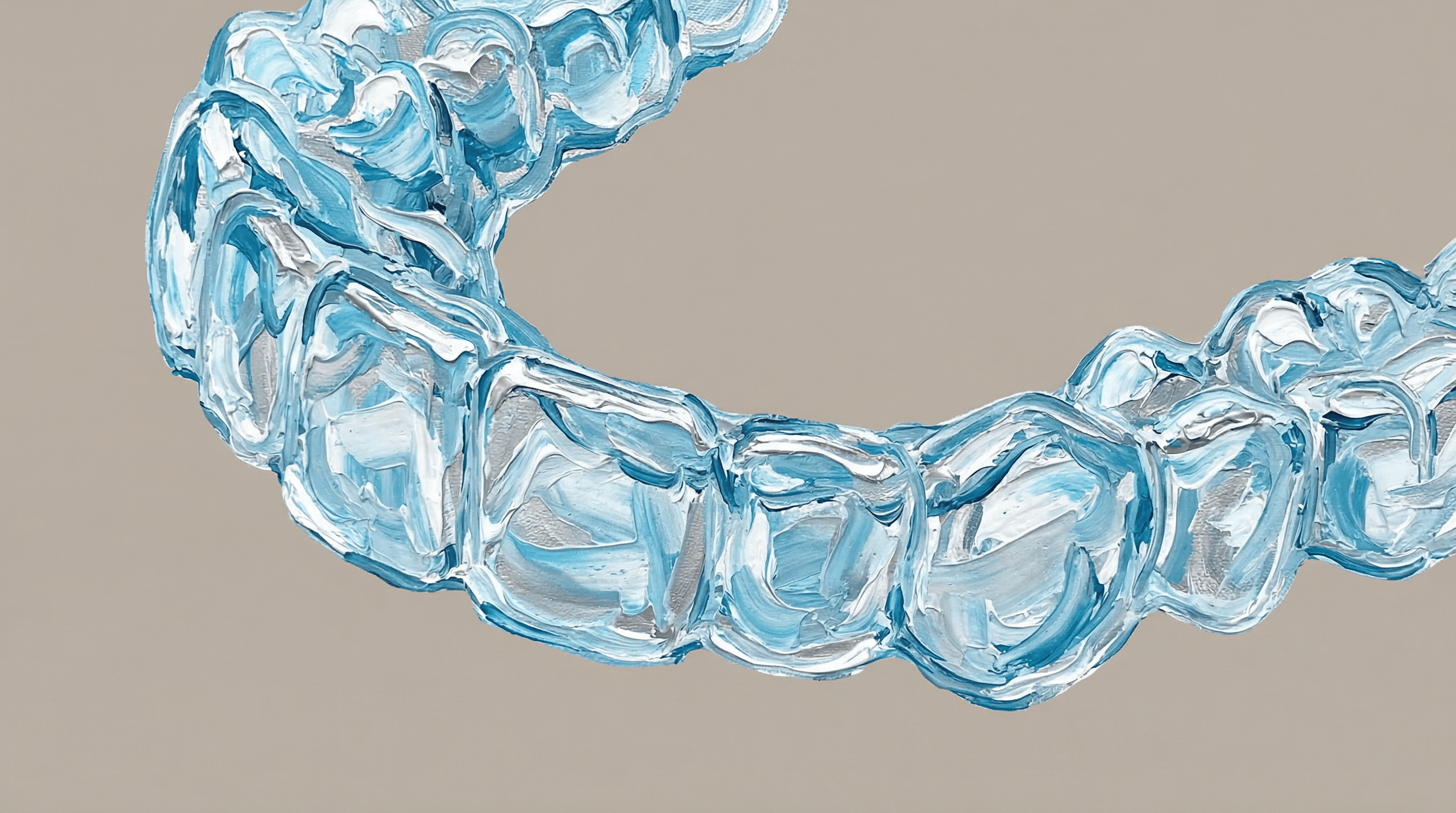
3D Smile aligners are transparent removable trays that gradually move the teeth. They are made based on 3D scan data and are suitable for mild and moderate bite disorders. More details are available on the 3D Smile Aligners page.
Myobrace trainers are functional appliances used to correct habits that affect the bite, such as mouth breathing and incorrect tongue position. They are mainly used in children. More details are available on the Myobrace Trainers page.
Orthodontic plates are removable appliances for children with primary and mixed dentition. More details are available on the Orthodontic Plates page.
TMJ splints, myorelaxation splints, and retention trays are functional appliances used to protect teeth, unload the joint, and maintain the result. More details are available on the corresponding pages.
Splint systems, bruxism treatment, tooth splinting, and TENS diagnostics are gnathological and periodontal methods. More details are available on the corresponding pages.
Indications for Orthodontic Treatment
- Crowded teeth: the most common indication.
- Malocclusion: deep bite, open bite, crossbite, distal bite, or mesial bite.
- Spaces between teeth: diastemas and tremas.
- Preparation for implant placement: creating space for an implant.
- Preparation for prosthetic treatment: aligning teeth before restorations are made.
- Impacted teeth: bringing the tooth into the dental arch.
- Relapse after previous orthodontic treatment.
Treatment Stages and Duration
Diagnostics
Diagnostics includes CBCT, panoramic X-ray, 3D scanning, photographic documentation, and, if necessary, cephalometric X-ray. The data are analyzed and a plan is prepared with calculated tooth movements.
Preparatory Stage
Oral sanitation is performed: cavity treatment, extraction of teeth that cannot be preserved if included in the plan, and professional oral hygiene.
Active Orthodontic Stage
Braces are placed or aligners are made. Regular visits are required for activation: every 4–8 weeks for braces, and every 1–2 weeks for aligners, with tray changes at home. Active treatment lasts from 6 months in mild cases to 2–3 years in complex anomalies. Exact timing is determined after diagnostics; prognosis without examination is impossible.
Retention
A fixed retainer is a thin wire bonded to the inner surface of the teeth. A removable retention tray is worn at night. Retention is a lifelong stage: without it, relapse may occur.
Contraindications
- Untreated inflammatory periodontal diseases: periodontitis must first be stabilized.
- Incomplete bone growth: for some methods this is an age-related limitation.
- Oncological diseases in the active stage.
- Severe osteoporosis.
Why Iskusstvo Clinic
Orthodontics in a Surgical Context
When orthognathic surgery is indicated, meaning surgical repositioning of the jaws, the orthodontist and maxillofacial surgeon plan the treatment together. Both specialists work at Iskusstvo Clinic, which prevents inconsistency between specialists from different institutions.
Gnathological Control
Before orthodontic treatment, TMJ function is assessed to avoid a situation in which tooth movement worsens joint function.
Frequently Asked Questions
At what age is it best to start orthodontic treatment?
Functional appliances such as trainers and plates are usually used at 6–11 years of age, during primary and mixed dentition. Braces for permanent dentition are usually started from 12–14 years. Adults can begin treatment at any age; the main limitation is severe periodontitis. It is never too late to start orthodontics.
Aligners or braces: which should I choose?
Aligners are more convenient: they are removable, almost invisible, and allow unrestricted oral hygiene. Braces are more effective for complex movements, including vertical movements and root rotations. In mild and moderate cases, results may be comparable. The orthodontist determines the best option after diagnostics.
How long does bite correction take?
Treatment may take from 6 months for minor disorders to 2–3 years for complex anomalies. After active treatment, lifelong retention with a retainer and/or tray is required. Exact timing can only be determined after diagnostics.
Do teeth need to be removed before braces?
It depends on the case. In pronounced crowding or when space must be created, 4 premolars may sometimes be removed. If there is enough space and the prognosis is favorable, treatment can be performed without extractions. The decision is made by the orthodontist based on diagnostics; there is no universal answer.
OUR SPECIALISTS
A team that continues the traditions of Professor A.I. Nerobeev's school. Our specialists not only practice but also teach, developing unique techniques in reconstructive and aesthetic medicine.
Leave your number and we will contact you