 My Account
 +7 (495) 129 37 00
 st. Derbenevskaya, 9
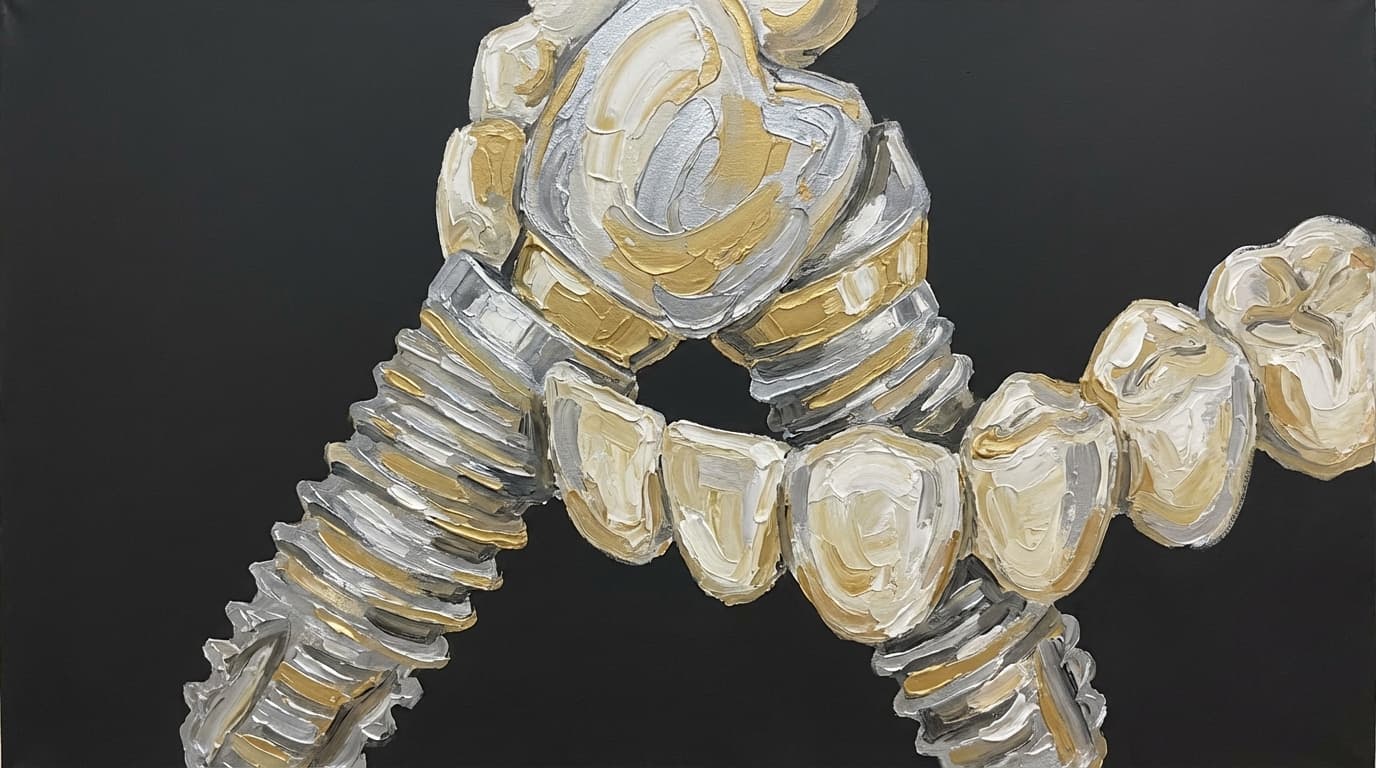
Dental Implant Brands
Premium implant brands: Straumann (Switzerland, SLActive fast integration), Nobel Biocare (All-on-4, TiUnite surface), Dentium (Korea, SuperLine reliability).
Strauman
Swiss premium implants for fast osseointegration, smaller diameter, high strength, 98%+ survival rate, ideal for complex atrophy cases.
Available sections:
Choosing a dental implant system is one of the key questions at the treatment planning stage. There are hundreds of manufacturers on the global market, but evidence base, long-term clinical data, and technical support resources are distributed very unevenly.
At Iskusstvo Clinic, three certified systems are used: Straumann from Switzerland, Nobel Biocare from Sweden, and Dentium from South Korea. Each has its own specialization, evidence base, and clinical niche. Below is an objective comparison without promotion of a specific brand: the surgeon selects the system based on anatomy and the clinical task, not marketing priorities.
It is important to understand that implantation success is determined not only by the implant brand, but also by the surgeon’s qualification, the quality of diagnostics, the condition of the bone, and the patient’s hygiene. An expensive implant in the hands of an inexperienced surgeon can produce a worse result than a more accessible implant placed according to an impeccable protocol.
Straumann: Switzerland
Founded in 1954, Straumann is one of the oldest and most extensively studied implant systems in the world. Its headquarters are in Basel, Switzerland. The company specializes exclusively in implantology and regenerative dentistry.
Key characteristics. The SLA surface, Sandblasted Large Grit Acid-Etched, and its SLActive modification are among the most studied implant surfaces in the world by the number of randomized clinical trials. SLActive shortens the osseointegration period to 3–4 weeks compared with standard surfaces. The Bone Level, BL, and Tissue Level, TL, systems represent two fundamentally different approaches to the connection between implant and bone, covering a wide range of clinical situations.
Evidence base. More than 3,000 publications in peer-reviewed journals. Ten-year survival above 95% according to systematic reviews. One of the gold standards used for comparison when new systems are evaluated.
Clinical niche. Optimal when long-term predictability is a high priority, in complex anatomical situations, in immediate loading protocols, and in the aesthetic zone.
Nobel Biocare: Sweden
Founded in 1952 by Professor Per-Ingvar Brånemark, the author of the concept of osseointegration. Nobel Biocare was the first company in the world to use titanium endosseous implants in clinical practice and played a major role in shaping modern implantology as a science.
Key characteristics. NobelReplace and NobelActive are the two main systems. NobelActive is a tapered implant with self-cutting geometry that provides high primary stability in low-density bone and in immediate loading. All-on-4, the protocol for restoring an entire dental arch on four implants, was developed and patented by Nobel Biocare. NobelProcera is a digital manufacturing system for prosthetic restorations integrated into the Nobel protocol.
Evidence base. More than 50 years of clinical practice. The first long-term data, over 30 years, on osseointegration. Extensive research library on the All-on-4 protocol.
Clinical niche. Optimal for complete edentulism, All-on-4 and All-on-6, immediate loading, low-density bone in the upper jaw, and complex reconstructive cases with digital prosthetics.
Dentium: South Korea
Founded in 2000 in South Korea, Dentium is one of the leading Asian implant systems and is actively expanding its presence in the European and Russian markets. It is positioned as a high-quality solution at a more accessible price compared with Swiss and Swedish systems.
Key characteristics. Implantium and SuperLine are the main product lines. The Xpeed surface, activated by ultraviolet light, is positioned as supporting faster osseointegration. The system offers a wide range of diameters and lengths. Dentium actively invests in clinical research and publications.
Evidence base. There is significantly less long-term data than for Straumann and Nobel. Published five-year data show satisfactory results. Studies are mainly from Korea and Asia, so geographic representativeness is limited.
Clinical niche. A good price-quality ratio for standard indications. Suitable for routine clinical situations with sufficient bone volume. In complex protocols such as immediate loading, atrophy, or All-on-4, Straumann and Nobel Biocare are preferable because their evidence base for these protocols is much stronger.
How the Implant System Is Chosen at Iskusstvo Clinic
The surgeon does not promote a specific brand. The system is selected according to the clinical task. The following factors are considered: bone volume and density according to CBCT, loading protocol, immediate or delayed, anatomical features, prosthetic requirements, and the patient’s budget. During the consultation, the doctor explains why a particular system is recommended in the specific case.
Frequently Asked Questions
Straumann or Nobel: which implant is better?
Both are world-class systems with an extensive evidence base. Straumann is used more often in Europe and when accelerated osseointegration, SLActive, is especially important. Nobel is optimal for complete edentulism and All-on-4 protocols. In most standard situations, the clinical results of both systems are comparable. The surgeon will choose based on anatomy and the task.
Are Dentium implants good?
For standard indications, yes. This is a proven Korean system with satisfactory mid-term data. In complex protocols and bone atrophy, European systems with a 30-year evidence base are preferable. Dentium is a reasonable choice with a limited budget and standard clinical conditions.
Does the manufacturer matter, or is the surgeon more important?
The surgeon’s qualification is more important than the brand. Leading systems are designed with a safety margin to compensate for human factors, but no implant can eliminate planning errors or protocol violations. When choosing a clinic, the first things to evaluate are the level of diagnostics and the surgeon’s experience.
Bone Grafting
Bone grafting, or augmentation, is a group of surgical methods used to restore lost volume of the alveolar ridge for subsequent implant placement. Bone atrophy after tooth extraction progresses continuously. In the first 6 months without additional measures, the alveolar ridge loses on average 3.8 mm horizontally and 1.24 mm vertically; over 3–5 years, the losses continue to increase.
When teeth have been missing for a long time, the deficiency may be so pronounced that direct implant placement is impossible. Bone augmentation for an implant is a standard predictable procedure, and the overall survival of implants placed after augmentation is comparable to implantation in native bone when the method is selected correctly and the protocol is followed.
At Iskusstvo Clinic, the volume and method of bone grafting are determined based on CBCT data: three-dimensional measurement of the defect, including width, height, and length, the distance to the mandibular nerve and maxillary sinus floor, and the condition of the remaining bone. Virtual planning allows the surgeon to calculate the exact volume of required material and plan simultaneous or delayed implant placement before the first incision. For extensive reconstructions, such as severe atrophy and combined defects, the clinic’s maxillofacial surgeons may be involved.
Materials for Bone Grafting
Autologous Bone: Autograft
The patient’s own bone is the most biologically valuable material: it contains living osteoblasts, osteoinductive growth factors such as BMP-2, BMP-7, and TGF-beta, and an osteoconductive mineral matrix. It is harvested from intraoral donor sites: the retromolar area, chin symphysis, or mandibular ramus. The volume of an intraoral autograft is limited. When larger volumes are needed, the iliac crest may be used as an extraoral donor site. The disadvantage is the need for a second surgical field.
Bio-Oss: Geistlich Pharma, Switzerland
Bio-Oss is a deproteinized bovine bone mineral and the most studied xenograft in implantology. The deproteinization process completely removes organic components and eliminates antigenicity while preserving the mineral matrix with a three-dimensional porous structure identical to human cancellous bone. Bio-Oss acts as an osteoconductive scaffold: osteoblasts grow through its pores and synthesize new bone. Its key property is slow resorption over 3–5 years, which helps maintain volume throughout regenerate maturation and after implant placement.
Allografts: Bone Bank
Processed human donor bone. It has an osteoconductive effect and is used for medium defects and in combinations with other materials.
Bone Grafting Methods
Guided Bone Regeneration: GBR with Material
The defect is filled with Bio-Oss under a Bio-Gide barrier membrane. This is the method of choice for moderate horizontal defects up to 3–5 mm. The membrane isolates the regeneration zone from soft tissues, whose fast-growing cells would compete with osteoblasts.
IDR Protocol: Implant Driven Regeneration
The implant is placed simultaneously with the filling of defects around it using bone material under a membrane. This method is used in horizontal deficiency, insufficient width, when there is enough bone height for primary stability. It shortens total treatment time by 4–6 months compared with a two-stage approach, first augmentation and then implant placement.
Laminate Technique
Thin cortical bone plates, laminates 1–2 mm thick, taken from an autograft or bone bank, are fixed with microscrews or pins to the atrophied ridge, forming a shell. The internal space is filled with a 50/50 mixture of autogenous bone and Bio-Oss, then covered with a Bio-Gide membrane. The unique advantage is that it allows simultaneous increase of both ridge width and height, a task that is difficult to solve with standard GBR.
Block Autogenous Grafting
A monoblock of cortical bone from the retromolar area or symphysis is fixed to the recipient site with microscrews. Gaps are filled with Bio-Oss and covered with a Bio-Gide membrane. This provides the maximum augmentation volume available from intraoral donor sites. It is indicated for pronounced defects when neither GBR nor the laminate technique can provide the required volume.
Treatment Sequence in Bone Deficiency
CBCT diagnostics, determination of defect volume, selection of method and material, professional oral hygiene and sanitation if necessary, augmentation surgery with simultaneous implant placement when possible using the IDR protocol, healing period of 4–9 months, control CBCT, implant placement if it was not performed simultaneously, osseointegration for 3–6 months, and prosthetic restoration.
Rehabilitation After Bone Grafting
The postoperative period after bone grafting is more demanding than after simple implant placement. Maximum swelling occurs at 48–72 hours. Antibiotic therapy is mandatory. A strict diet is required: soft food for 2–3 weeks, with chewing in the surgical area excluded. Smoking is absolutely prohibited for at least 2 weeks because nicotine critically impairs graft vascularization. Sutures are removed on days 10–14.
Suture dehiscence is the most common complication. It can occur due to flap tension, early violation of the postoperative regimen, or smoking. With minor dehiscence, local antiseptic care is used and part of the membrane may still perform its function. With significant dehiscence, revision may be required. This is why tension-free suturing is one of the most important technical aspects of the operation, and patient instruction is a mandatory stage.
Frequently Asked Questions
Bio-Oss or autogenous bone: which is preferable?
Autogenous bone contains living cells and growth factors, so it is more active biologically and forms bone regenerate faster. However, it requires a second surgical field, meaning an additional incision and discomfort in the donor area, and its volume is limited. Bio-Oss provides stable volume, does not require additional surgery, and resorbs slowly. The optimal compromise is a 50/50 mixture: the biological activity of autogenous bone plus the long-term volume stability of Bio-Oss. The surgeon chooses the material based on the volume of the defect.
How long should I wait after bone grafting before implant placement?
In horizontal defects treated with IDR, the implant is placed simultaneously and loading is performed after 4–6 months. With the laminate technique and block grafting, implant placement is usually performed after 6–9 months. The timing is confirmed by control CBCT: implants should not be placed into immature regenerate.
How painful is the surgery?
Under anesthesia, the procedure is painless. During the first 3–5 postoperative days, pronounced swelling and moderate soreness may occur. If autogenous bone is harvested from the symphysis or retromolar area, there may also be discomfort in the donor site. All symptoms are controlled with prescribed medications.
OUR SPECIALISTS
A team that continues the traditions of Professor A.I. Nerobeev's school. Our specialists not only practice but also teach, developing unique techniques in reconstructive and aesthetic medicine.
Leave your number and we will contact you